


 Posted in
Former General Secretary of the Iranian Teachers’ Trade Association calls for international solidarity
Esmail Abdi, exiled trade union leader, explains why focussed, united and energised solidarity with Iranian workers is essential for guaranteeing peace and democratic rights in Iran, including trade union rights.
The Iranian Justice Ministry, by issuing death sentences, arbitrary arrests, and persecution campaigns, is attempting to silence the voices of resistance. However, the historical experience of trade union movements, including Iranian teachers and workers, has shown that repression only strengthens resistance and the cohesion and determination of their organisations. It has also shown that international solidarity, which creates maximum strategic leverage as well as practical support for imprisoned activists, is vital.
Independent trade unions and organised collective action are not only tools for achieving economic and social rights, but a fundamental force in redefining democracy, reforming unequal structures, and redistributing social power. In the present environment, privatization of public services, commercialization of education and healthcare and resultant job insecurity threaten the professional identity of workers and weaken their capacity for collective organisation. In these conditions, trade union organisations – through active solidarity, social and political leverage, and international networks – create opportunities to bring real and lasting change. The legal and ethical foundation of these associations are set out in ILO Conventions 87 and 98, which guarantee the right to freedom of association, collective bargaining, and prohibit discrimination against union activists. These principles are incorporated in the provisions of the Constitution of Iran but are ignored and denied by the regime.
Iranian teachers as the pillar of public education, centred on the Coordinating Council of Iranian Teachers’ Trade Associations (CCITTA), a member of Education International (EI), and local networks, have created a coherent and extensive organisation throughout the country. In cities and villages, they play a vital role in promoting free, equal, and just education and pursue educational justice by resisting the commercialization of education in line with UNESCO recommendations and the principles of the Universal Declaration of Human Rights. Iranian educators, facing dismissal, inferior job benefits, forced retirement, and even imprisonment and exile, have bravely demonstrated their commitment to defending public education and social rights and have proved that solidarity is the pre-requisite for achieving their just demands.
As many readers of Iran Today will know, my trade union activities in CCITTA resulted in my arrest, nine years imprisonment and dismissal from education. However, my ordeal, and that of other CCITTA elected leaders, has strengthened our resolve to continue the struggle and build the teachers’ and other workers’ movements.
Other trade union bodies in Iran, including the Syndicate of Bus Drivers, and Haft Tappeh Sugarcane Workers, are prominent examples of labour and social movement resistance and struggle. These movements, with the active participation of the young generation and support from retirees, courageously pursue economic and occupational demands while strengthening their capacity for achieving structural change and collective power in the longer term.
These struggles must be linked with the broader movement for change. The women’s movement, for example, with the universal slogan “Woman, Life, Freedom,” demonstrates that the struggle against discrimination and gender inequality is an inseparable from justice-oriented movements and our trade union campaigns.
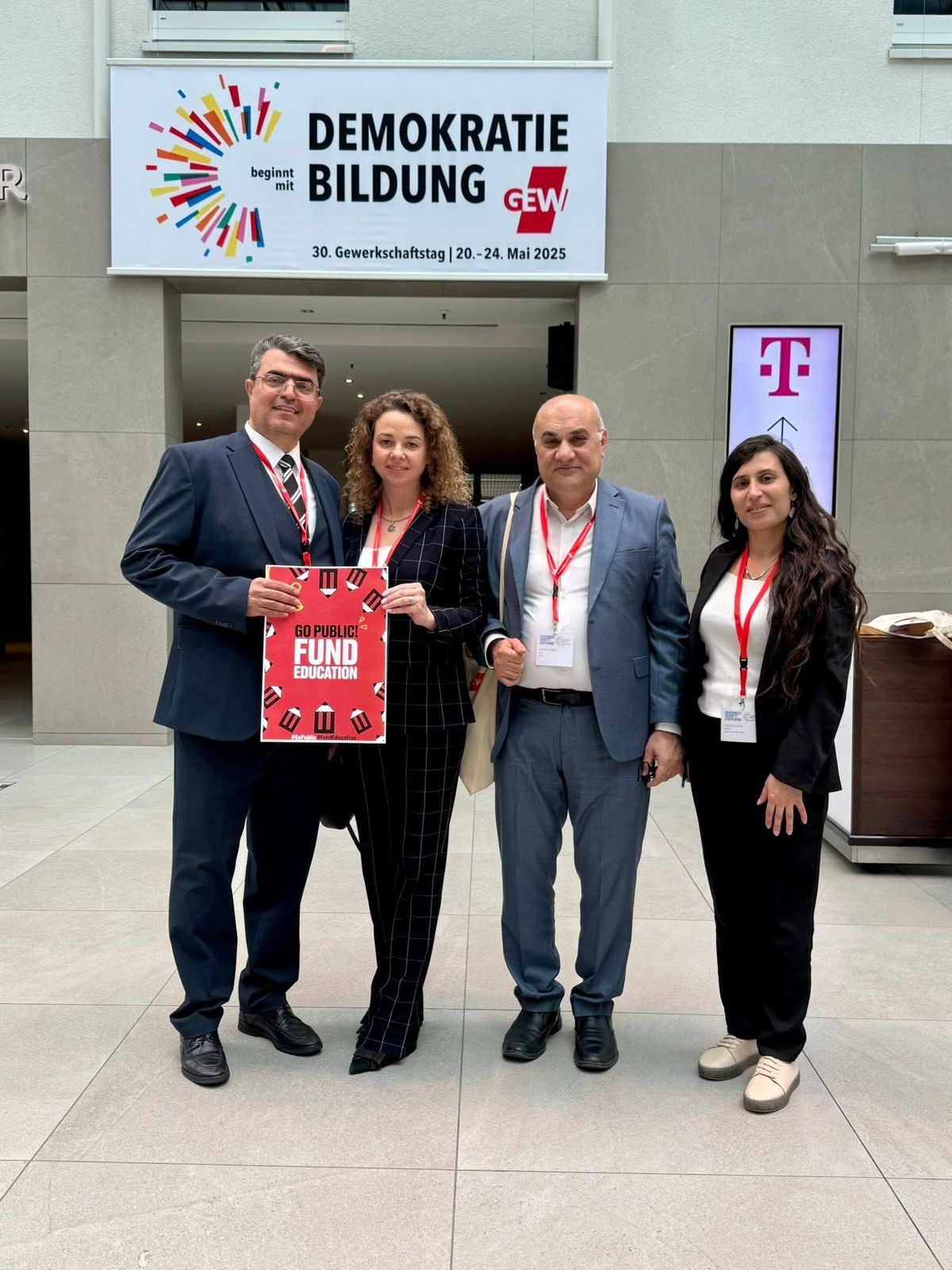
International experiences, including teachers’ strikes in France and Spain, the vital place of the union movement in the anti-apartheid struggles in South Africa, and labour campaigns in Chile, Mexico and Argentina, have shown that professional resistance, together with international support, is able to alter the balance of power in favour of workers. Trade unions in Britain and Europe, by extending their solidarity with Iranian activists, play a key role in protecting and extending workers’ rights and strengthening social justice and it is vital that this solidarity continues.
I believe that national and international solidarity, together with organised resistance and support for unions and professional councils, including CCITTA, with the backing of international institutions such as EI, ILO, the ITUC, and Amnesty International, is essential to achieving social justice, free and equal education, and real freedom for workers and the people of Iran.
Please read Iran Today 2025 Autumn issue at: https://codir.net/wp-content/uploads/2025/09/Iran-Today-2025-e_Version.pdf