



 Posted in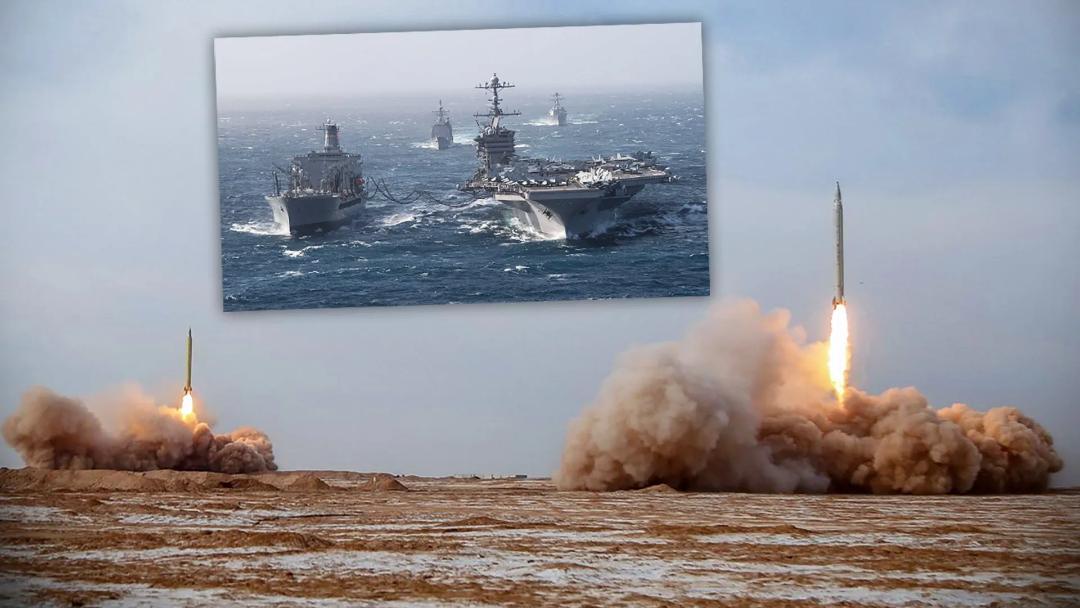
The shockwaves of US intervention in the Middle East can be felt in the West, but as Steve Bishop points out, the way ahead is still uncertain
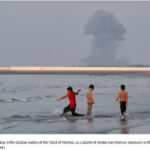
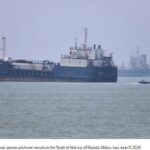
SELF-INTEREST can be a great motiva tor when it comes to the silent majority taking notice of major international events. Two months ago, not many people would have been familiar with the Strait of Hormuz, its location or its strategic significance for international trade.
Now, few are unaware of the importance of this stretch of waterway, not least because it is affecting the price of their petrol, their food, and may affect their ability to take a holiday if jet fuel supplies continue to run low.
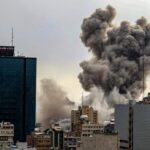
It is a cruel reality that for many this impact is far greater than the fact that the people of Gaza, Lebanon and Iran are facing the might of the world’s biggest military power, the United States, and its powerful regional ally, Israel, on a daily basis. Thousands have lost their homes, livelihoods, and many their lives in the past three years, in the escalating war zone of the Middle East. However, this does not always register, until it has an impact upon day to day living in the West.
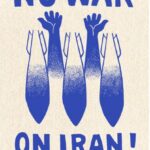
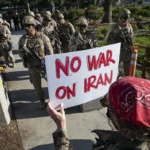
Which is not to say that millions have not protested against the genocide in Gaza, the illegal aggression against Iran and the invasion of Lebanon. Protests have been widespread and vociferous with anti-war movements across Western Europe and the US mobilising to pressurise their governments to halt the carnage and take the path of negotiation. However, the desire of the military industrial complex of the US and its NATO allies to reshape the Middle East and reassert Western hegemony over the region’s resources remains the most powerful driver of current events.
US imperialist ambitions have never been far below the surface as interventions dating back to Korea and Vietnam, then more recently, Afghanistan, Libya, Iraq and Syria illustrate. Interventions in Latin America alone have included the coup d’etat in Chile in 1973, interference in Grenada and Panama, the 60-year long illegal blockade of Cuba and the abduction last year of Venezuelan President Nicholas Maduro and his wife Celia Flores. Countless other examples could be cited.
US interference in Iran predates the 1979 revolution in that country and is embedded in the interest of US corporations in exploiting the oil and natural gas wealth that Iran enjoys. The combined efforts of the CIA and British MI6 were instrumental in bringing down the democratically elected government of Mohammad Mossadegh in 1953, when moves were made to nationalise the oil industry. The installation of a dictator, in the form of the shah, was designed to defend an imperialist foothold in the region and head off the tentative steps being taken towards a wider people’s democracy in Iran.
The 1979 national democratic revolution opened up the possibility of Iran moving in a progressive direction, before being hijacked by the Islamist clergy and the establishment of a theocratic dictatorship in the form of the Islamic Republic of Iran.
As the standard bearer of Shia “political Islam” the adventurist foreign policy of the Islamic Republic, through its “Axis of Resistance” network, presented a challenge not only to Western hegemony in the region but the fundamentalist Sunni Muslim vision of Saudi Ara bia and the Zionist expansionism of the Israeli right. The pressures which have resulted in the current war of aggression, initiated by the US and Israel, have been building for decades.
Before the ramping up of US assets in the region for the present military conflict, the US had an estimated 45,000 personnel in the Middle East. Bases in Syria, Iraq, Saudi Arabia, Bahrain, UAE, Qatar, Kuwait and Jordan housed fighter jets and refuelling aircraft, all within striking distance of Iran. Add to that the massive military presence of the Israeli Defence Force (IDF) and it is clear that the present conflict was not only planned for but regarded as a likely scenario.
The trajectory of the war has not however gone according to plan for the US and its allies. While overwhelming military capability has clearly been on the side of the US-Israeli axis the strategic hold which Iran has upon the Strait of Hormuz has proven key to the resistance of the theocratic dictatorship.
The ability to halt supplies of fuel and ferti liser, essential for agriculture, has brought the conflict directly into Western homes as prices begin to spiral and murmurs of discontent with the conduct of the war and its objectives, such as they are, begin to grow.
The proclamations of US President Donald Trump, ranging from the incendiary to the insane, have not inspired any confidence in the wider public in the US and elsewhere that the war will either be brief or succeed in its claims of regime change and reducing the impact of political Islam in the region.
The two-week ceasefire, announced on 8 April, was immediately mired in controversy with the US and Iran having widely differing interpretations and the IDF claiming, with US support, that Lebanon was not part of the deal, so the bombing of that country continued uninterrupted. The US claims that Iran has agreed to give up its current stockpile of enriched uranium, while Iran is adamant that it has struck no such agreement.
The 10-point plan put forward by Iran, as the basis of the ceasefire, runs counter to the positions articulated by the US as its red lines for reopening the Strait of Hormuz and allowing the free movement of international shipping. Trump has described the Iranian proposal as no more than a “workable basis on which to negotiate.”
It is doubtful that the US will concede entirely to demands such as the lifting of US sanctions, releasing frozen Iranian assets, Iranian control over the Strait of Hormuz or the withdrawal of US forces from the region, although Trump has said: “Almost all of the various points of past contention have been agreed to between the United States and Iran, but a two-week period will allow the agreement to be finalised and consummated.”
At the time of writing, the ceasefire has been extended indefinitely by the US, although it continues to blockade Iranian ports and cargo is not moving through the Strait of Hormuz, as the Iranians exercise their control over the waterway. The impasse is being felt most keenly by the Iranian people but is increasingly impacting upon the region and wider world economy.
Pakistan continues to offer to host further peace talks, but the Iranian and US-Israeli positions remain far apart. Hardliners within the Iranian dictatorship increasingly appear to be prepared for a long war, to wear down the US and undermine the world economy, while the US continues to threaten to resort to more force if Iran does not back down. Uncertainty about the way forward prevails but unless serious negotiations get underway soon the prospects for the people of the region, and for world peace, will continue to be extremely bleak.
This article was published in Liberation Journal on 4 May 2026
Steve Bishop is an Executive member of the Committee for the Defence of Iranian People’s Rights (CODIR), the solidarity organisation campaigning for peace and progress in Iran. Steve is a member of Liberation and a regular contributor to Liberation Journal.