


 Posted in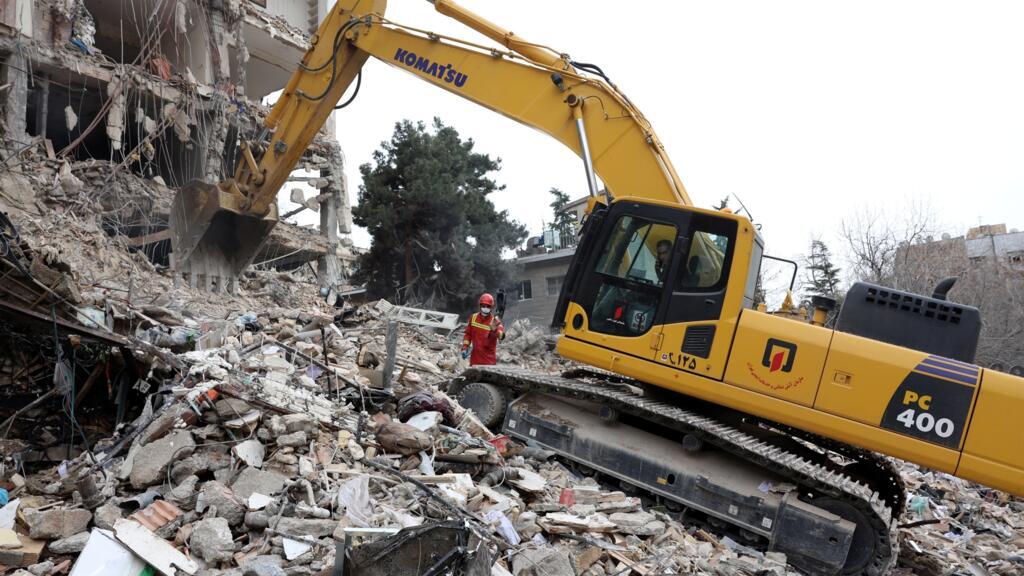
By: Ruben Brett
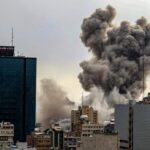
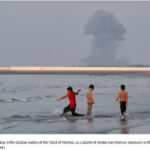
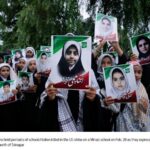
While attention has been focused on high-profile killings of state leaders and shocking massacres of civilians by US and Israeli bombing – including 175 primary schoolchildren in Minab on the first day of the unilateral war imposed on Iran – the full toll of forty days of war on Iranian workers has largely gone unreported.
Estimates provided to the Committee for Defence of Iranian People’s Rights (CODIR) by labour movement sources in Iran suggest that up to 2 million workers have been hit by redundancy as a result of US-Israeli attacks destroying vital infrastructure and causing shortages of key industrial supplies. Entire supply chains have been wiped out, leading to mass layoffs and structural unemployment, as skilled workers find themselves surplus to demand in a crippled economy. This comes as up to a million households are internally displaced, mostly from Tehran, according to the United Nations Refugee Agency.
Iran’s steelmaking, automotive and petrochemical industries have been among the worst affected; at the Mobarakeh Steel Complex in Isfahan, reportedly destroyed by bombing, at least 29,000 workers – 12,000 directly employed and 17,000 outsourced – have lost their jobs. As the largest steel producer in the wider Middle East region, with a total output of 7.2 million tonnes per year, Mobarakeh was a major link in industrial supply chains the loss of which has sent shockwaves far beyond its own workforce. It is far from the only example.
Transportation has also been severely affected. Iran’s extensive network of airports remains largely closed, with many having been bombed. As a result, the wider network of businesses associated with the aviation industry has more or less collapsed. Knock-on effects on local economies are likely to push many thousands of families into poverty – with the situation not having improved since the last round of US-Israeli attacks in June 2025, when estimates from Iranian media suggested 80% were already struggling to meet their basic needs.
Other transportation services such as taxis have been hit hard, not only by the chaos of the war itself but by the internet blackout, which has remained in force since US-Israeli attacks began at the end of February following a previous 21-day blackout in January. With little to no internet connectivity, taxi drivers cannot receive card payment as the two main banking apps remain offline. This is particularly damaging in a largely cashless economy adapted to chronic hyperinflation, where bags full of banknotes would be required for everyday purchases.
The Islamic Republic’s minister for communications, Sattar Hashemi, told journalists in January that the blackout was costing Iran’s economy at least 50 trillion rials each day, over £28 million, while acknowledging that the true damage was likely much greater. Others have placed estimates up to 130% higher on the loss of economic activity. Home-based small businesses, often women using WhatsApp to arrange sales, have lost their income streams entirely, while workers in retail and other service industries often go unpaid.
Although a new 1 million rial note, the highest denomination ever, was released at the end of March, it is not yet widely available. Retail prices continue to rise, with inflation for food and drink already estimated at 105% year-on-year by February, while the country’s central bank has warned that overall inflation could reach 180% if industrial shortages persist. A 60% increase in the minimum wage promised at the start of the year has not materialised, with ministers reportedly failing to issue the necessary orders. Trade unionists continue to call for wage levels to be indexed to inflation to reflect the real basket of living costs for Iranian families.
Missile strikes combined with cyberattacks have significantly damaged the infrastructure of the country’s largest financial institution, Bank Sepah, compounding disruption from the domestic internet blackout. ATMs malfunctioned across multiple areas and staff at some branches told customers that withdrawals and deposits were altogether impossible following attacks in March. Payment of salaries was disrupted, including for the bank’s own staff.
Amid widespread devastation to industry, Iranian workers’ organisations continue to face repression. On top of tens of thousands of detentions reported by rights groups in the security crackdown since January’s mass protests, according to government sources 1800 people have been detained during the war with 700 being identified as opposition elements. This number is likely to include many workers’ representatives deemed subversive, who have been among the main targets of previous waves of arrests.
Trade unionists demand the right to organise independently. Some have pointed to history to demonstrate the contribution of organised labour to national defence. Workers’ councils established in 1979 helped to manage and maintain production during the Iran-Iraq War, although they were eventually suppressed and replaced with alternative structures – Islamic Labour Councils dominated by government and employers’ representatives approved by the clergy. Iranian workers remain committed to resistance against foreign aggression.
At the same time, long-term reallocation of funds from the military apparatus to social safety nets and infrastructure remains a key demand of workers’ protests since 2025. Following the devastation wrought by war, public works programmes to rebuild could provide jobs to replace many of those lost and income to displaced populations, but no such programmes have materialised.
While workers continue to organise themselves and agitate for better conditions, the war has made this far harder; the damage to key industrial supply chains leaves much of the fabric of working-class life in tatters as communities built around industry fall apart. Repression only compounds these effects and benefits employers who, amid crisis, can prey on vulnerable workers with nothing to sell but their labour-power and no recourse to collective bargaining and protections that could have been offered by trade union structures.
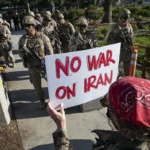
Iranian workers need peace more than anything, to rebuild their lives collectively and to pursue their own struggles for labour and democratic rights. It is imperative that trade unionists in Britain and around the world stand with our Iranian counterparts in demanding peace – demanding an end to aggression against Iran and an end to UK support for aggression which has included allowing the use of British military bases in Cyprus for supposedly “defensive” US actions. As Amnesty International asked in March, “How does the UK government know that US forces are not using British bases to strike schools, hospitals or other civilian infrastructure in Iran?” This and many other questions about the UK’s involvement have gone unanswered.
Support for CODIR – established jointly by British and Iranian trade unionists in 1981, and active in solidarity with Iranian workers ever since – has never been more needed, and we are proud to count on the support of eight British trade unions nationally along with growing numbers of trades councils and union branches and regional structures. When governments fail to stand for peace and progress, it falls to the workers’ movement to ensure our demands cannot be ignored.
Ruben Brett, trade unionist and an active StWC organiser in Sussex, is a Member of Central Council of CODIR.