




 Posted in
Saturday, May 30, 2026 — Efforts to extend the ceasefire between the United States and Iran and to reopen the Strait of Hormuz have reached a critical juncture; however, it remains uncertain whether what Washington characterizes as an “imminent agreement” will successfully overcome core points of contention. On Friday, following a promise of a “final decision” regarding the proposed framework, US President Donald Trump convened a two-hour meeting with his national security advisors in the White House Situation Room. Nevertheless, the session concluded without the announcement of a definitive resolution.
According to published reports, the framework under discussion entails extending the temporary ceasefire for an additional 60 days, reopening shipping lanes in the Strait of Hormuz, and continuing negotiations toward a more durable accord. Yet, precisely where Washington emphasizes Trump’s “red lines,” Tehran maintains that no final agreement has been executed and that no concessions will be granted prior to reciprocal concrete action by the opposing party.
Before entering the White House meeting, Trump stated that Iran must accept it will never possess nuclear weapons, that the Strait of Hormuz must be reopened free of tolls for the unhindered transit of vessels, and that residual naval mines in the waterway must be cleared or detonated. He further asserted that Iran’s deeply buried nuclear materials must be extracted and destroyed under the coordinated supervision of the United States, Iran, and the International Atomic Energy Agency (IAEA). Iranian officials and state-affiliated media outlets have rejected this characterization, contending that Trump is attempting to manufacture a “fabricated victory” from a text that has yet to be finalized.
Tehran’s reaction demonstrates that the gap between the two sides’ narratives remains profound. The Iranian Ministry of Foreign Affairs states that communications are still being exchanged and no final agreement is in place. Esmaeil Baghaei, the Ministry’s spokesperson, emphasized that at the current stage, the discussions center strictly on ending the conflict rather than the technicalities of the nuclear program. Furthermore, Iranian officials maintain that the administration of the Strait of Hormuz is a matter strictly between Iran and Oman, to be determined based on the national interests of both nations and international considerations, rather than mandated by directives from Washington.
Meanwhile, US Secretary of Defense Pete Hegseth escalated Washington’s coercive rhetoric on Saturday at a security summit in Singapore, stating that the United States is prepared to resume military strikes against Iran should negotiations fail. He asserted that US military capabilities are “fully sufficient” to restart operations and that American munitions stockpiles within the region and globally are adequate for such a contingency. This posture indicates that alongside diplomatic negotiations, the threat of military force remains an integral component of Washington’s pressure campaign against Tehran.
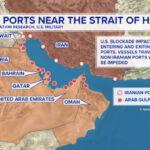
The issue of Hormuz now lies at the epicenter of the crisis. As one of the world’s most critical energy chokepoints, the practical closure of the Strait of Hormuz or restrictions on vessel transit has profoundly impacted global oil and gas markets. In recent weeks, Iran has utilized the waterway as its primary geopolitical lever by imposing restrictions, levying transiting fees on specific vessels, and establishing a new regulatory framework to control maritime traffic. Conversely, the United States has sought to compel Tehran to capitulate by enforcing a naval blockade on Iranian ports and imposing sanctions on entities involved in the management of the Strait.
According to reports, the preliminary framework, if approved, could pave the way for the resumption of vessel transit through the Strait of Hormuz; however, a complete restoration of maritime shipping to pre-war conditions will not be instantaneous, even in the event of an accord. Mine clearance operations, the repositioning of commercial vessels, the restoration of confidence among maritime insurance underwriters, and the mitigation of risks regarding fresh attacks will all require considerable time. Energy market analysts warn that even if the ceasefire is extended, the oil supply disruption could persist for weeks or months.
Parallel to the Strait of Hormuz, the nuclear issue remains the most significant impasse in the negotiations. Washington demands that Tehran provide explicit, legally binding commitments regarding its nuclear program, whereas Iran contends that such matters are outside the scope of the immediate, short-term agreement. Iranian officials have additionally rejected reports concerning the transfer of enriched uranium stockpiles to a third country or their delivery to intermediaries. This divergence indicates that even if a 60-day agreement to halt hostilities and reopen shipping lanes is achieved, the primary diplomatic battle over the future of Iran’s nuclear program will be deferred to subsequent rounds of negotiations.
In addition to demanding an end to the naval blockade and a reduction in sanctions, Iran seeks the unfreezing of a portion of its frozen assets and a cessation of Israeli attacks in Lebanon. While reports have emerged regarding the potential release of $12 billion in Iranian assets, Trump has stated that no funds will be transferred until further notice. This financial dispute could potentially obstruct the implementation of any prospective agreement.
Another dimension of the crisis involves Lebanon. Iran intends for the agreement with the United States to encompass a halt to Israel’s military campaign against Hezbollah. In recent weeks, Israeli attacks in Lebanon have intensified, resulting in the displacement of hundreds of thousands of individuals. The Lebanese government has reported the death toll from Israeli strikes to be in excess of 3,000. For its part, Israel states that a number of its soldiers and civilians have also been killed in the hostilities. Israeli Prime Minister Benjamin Netanyahu has yet to provide any clear indication of accepting a broader ceasefire, a factor that could further complicate Trump’s decision-making process.
Trump faces a dual predicament: on one hand, he is under domestic pressure due to rising energy prices and voter dissatisfaction ahead of the Congressional mid-term elections; on the other, he encounters resistance from hardline factions within the Republican Party who view any concessions to Tehran as capitulation. He must now choose between accepting a temporary framework to alleviate economic strain or persisting with a strategy of military pressure—a decision that could dictate the trajectory of the three-month conflict waged by the United States and Israel against Iran.
The political landscape within Tehran is similarly fragmented. While certain officials have alluded to a potential “political understanding,” figures closely aligned with the security establishment and parliament have cautioned that Iran must not rely on American promises. Mohammad Bagher Ghalibaf, the Speaker of Parliament, stated that Iran places no trust in “guarantees and words,” asserting that concrete reciprocal action remains the sole metric of evaluation. Such positions indicate that even if the text of an agreement is finalized, its ratification and execution will encounter significant friction in Tehran.
Consequently, the framework currently under consideration is not a comprehensive settlement, but rather a 60-day reprieve intended to avert a reversion to all-out war. This interlude could partially reopen the Strait of Hormuz, stabilize energy markets, and preserve a diplomatic pathway for future discussions regarding the nuclear program. However, if deep-seated disputes over the management of the Strait, frozen assets, Israel’s military role in Lebanon, and the ultimate disposition of Iran’s nuclear materials remain unresolved, this renewed ceasefire may prove to be nothing more than a brief postponement of a larger, impending crisis.