

 Posted in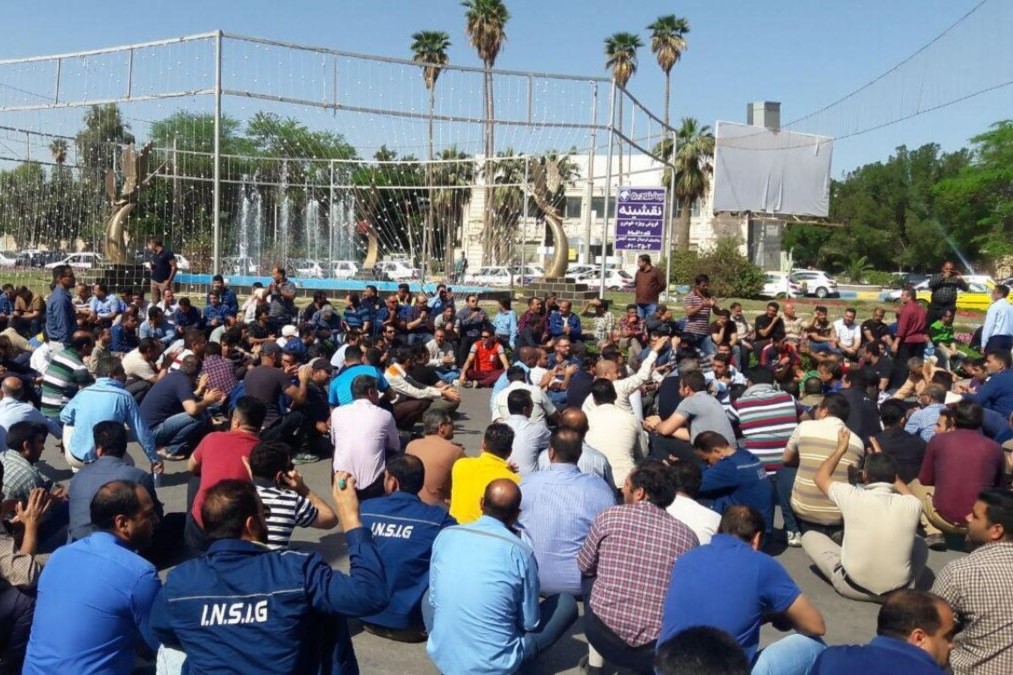
This interview with trade union activist, Naser Malek, not his real name, sheds light on the challenges faced by Iran’s labour movement. Iran Today explores with Naser the complex sociopolitical and economic landscape and examines how workers navigate a difficult environment to advocate for their fundamental rights.
Iran Today: What are the key restrictions imposed on the activities of independent trade unions in Iran?
Naser Malek: I would first point to the categorical legal and structural restrictions on trade union activities in Iran. For example, contrary to the provisions of Article 26 of the Constitution, Clause 4 of Article 131 of Iran’s Labour Code states that workers in any given workplace/unit have one of three options [of recourse in the workplace]: an “Islamic Labour Council”, a “Guild Association”, or a “Workers’ Representative”. Trade unions per se are deliberately not recognised under the country’s Labour Code and prohibited from operating officially or openly.
Furthermore, due to the absence of freedom of speech and a free press in Iran, workers are sometimes even unaware of those rights and entitlements they do have under the law and therefore cannot benefit accordingly.
The authorities go to extreme lengths to prevent workers or retirees from attempting to organise themselves outside of the prescribed structures, and such activities inevitably result in fierce security crackdowns.
Prominent and respected labour activists and advocates are often subjected to psychological and physical pressure by the authorities – and when they are “removed from the scene”, their replacements often lack the experience and nous to manoeuvre effectively and are themselves quickly neutralised by the regime.
IT: Looking back over the past 40 years of harsh restrictions on trade union activities, what have been the key trade union campaigns in Iran and their successes?
NM: Despite an extremely hostile environment, trade union activists were able to exploit a relatively rare period of breathing space back in the early 2000s [during the latter term of reformist president Mohammad Khatami, 1997-2005] to revive a number of the previously repressed trade unions. These organisations have managed to survive and operate, albeit under continuing pressure and intimidation from the authorities.
The monthly “Payam-e Sandika” (“Union Message”) magazine has also continued from 2011 to the present.
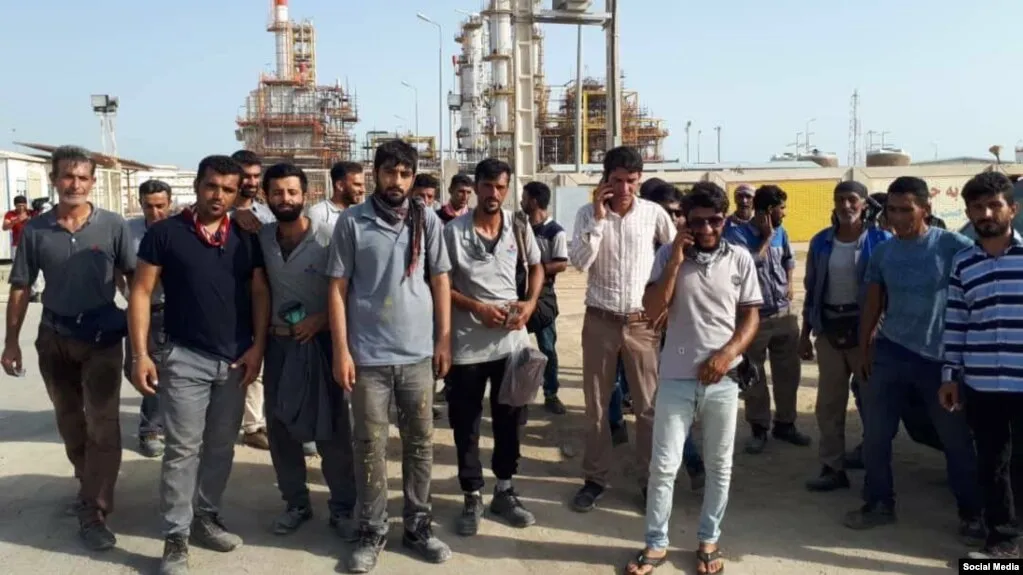
The project workers’ campaign for fair wages and better working conditions was launched in 2020. This campaign was able to exploit a technical loophole in the Labour Code to bring about an annual round of demands/protests for fairer living wages and increased paid rest days amid the harsh climate and conditions of oil and gas fields in Khuzestan province, southern Iran, for four consecutive years now.
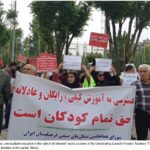
Recent years have also seen the launch and continuation of the nationwide movement of independent pensioners/retirees, which goes from strength to strength.
All these campaigns have had relative success and achieved important gains. Most importantly, they still continue.
IT: How best can workers in Britain show solidarity with workers in Iran, so that the latter are more able to pursue their legitimate demands and interests?
NM: The fraternal solidarity of workers in other countries is very important and impactful for the struggles of Iranian workers and the realisation of their demands.
A key act of solidarity would be to support the stances of independent workers’ initiatives in Iran by issuing statements and following them up with international organisations such as the ILO.
They should also take care not to be duped into dealing with representatives of “Khaneh Kargar” (the “House of Workers”), which is a regime front and completely divorced from the ordinary structures, functions, or practices one would ascribe to a trade union. It is a government-backed sectarian structure that purposely omits to represent non-Muslim Iranian workers, including atheists, and actively discriminates against them. While projecting itself as a bona fide representative of Iranian workers, “Khaneh Kargar” is in fact a yellow union established by the regime to carry its official line in the Iranian workplace.
British trade unionists should actively compel the Iranian regime, through official representations, to respect the freedoms stipulated in the Iranian Constitution, the Universal Declaration of Human Rights, and all ILO Conventions.
Representatives of bona fide Iranian trade unions and independent workers’ organisations should be invited to participate in international trade union conferences, seminars, training workshops, as well as other appropriate fora. This would provide them a significant boost, not least morale-wise.
IT: Iran is a founding and active member of the ILO and signatory to its Conventions. Can you confirm that, despite this, Iran does not fulfil its obligations and whether this has been brought to the attention of the ILO?
NM: Yes, Iran was one of the founding member countries of the ILO in 1919 and, as an active member since then, has ratified 15 ILO Conventions and six core Conventions.
However, its continual refusal to allow the free operation of bona fide trade unions and consequent brutal crackdowns flies in the face of these same commitments. Some trade union leaders have been subjected to seriously harsh prison sentences on bogus charges of “endangering national security” (a capital offence under Islamic Republic law) merely on account of their legitimate trade union activities. Others have been forced into hiding or exile.
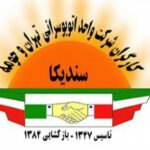
In 2007, a leader of the Syndicate of Workers of the Tehran and Suburbs Company attended an ILO meeting and raised several issues pertaining to the fraught situation of trade unions and worker activists in Iran.
Additionally, around a decade ago, the International Centre for Trade Union Rights (ICTUR) submitted a comprehensive plaintive report over the situation of workers’ rights in Iran, including a catalogue of fatal and serious incidents and health and safety failures in the Iranian workplace. Unfortunately, due to the lack of a dedicated capacity or route via Iran’s representative channel to the ILO, this complaint could not be progressed and nothing material came of it.
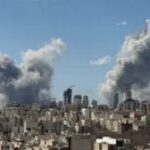
IT: What has been the impact of the recent 12-day war against Iran on the situation faced by Iranian workers, and their living and working conditions?
NM: In the aftermath of the 12-day war in June, Iranian workers are under immense and unbearable pressure owing to the multifaceted crises the country is now facing.
Many plants and workshops in Iran’s industrial zones are facing closure because of regular rolling power, water, and internet outages. Consequently, many of them have begun mass layoffs and have ceased paying the wages of their remaining workforces.
The domestic market has contracted sharply due to the spiralling economic crisis and rampant inflation, with many companies’ products simply not selling.
Furthermore, vital raw materials are nowhere near as readily available for some parts-manufacturing workshops as they were before June, and the picture was far from great then.
Owing to devastating levels of inflation, current monthly wages and pensions for many workers and retirees are barely sufficient to cover basic living costs for ten days.
The regime has also ramped up its internal repression. Noted women’s and workers’ rights activist, Ms. Sharifeh Mohammadi, has recently had her death sentence confirmed for a second time amid grave fears that her execution is imminent.
Harsh prison sentences have also been issued to teacher activists and prominent members of the Iranian Teachers Trade Association (ITTA), the latest being for Mr. Masoud Farhikhteh.
Project workers campaigning for their rights have also faced increasing intimidation, including constant summons to appear before the regime’s security and intelligence apparatus just for exercising what would be regarded as basic trade union rights elsewhere.
Suffice to state, the situation vis-à-vis workers’ rights inside Iran is decidedly bleak at present.