

 Posted in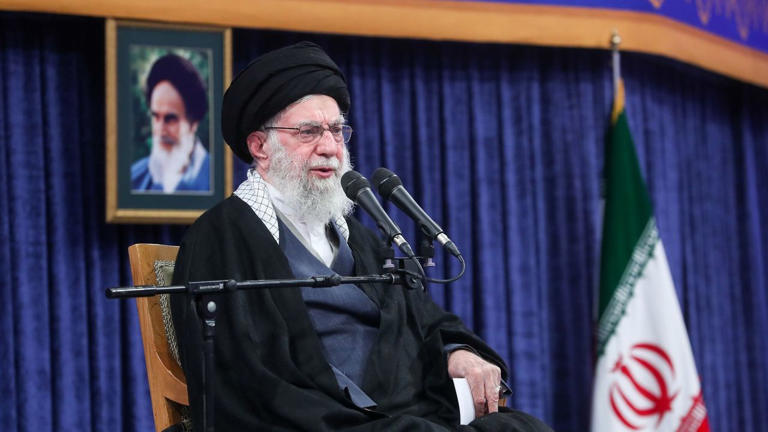
Support nationwide Protests across all provinces of Iran- Join CODIR’s solidarity actions in Britain with protesters in Iran
“RIOTERS must be put in their place,” stated the Islamic Republic regime’s ‘Supreme [Religious] Leader’ Ayatollah Ali Khamenei on Saturday 3 January, as the dictator directly ordered his security forces to up their repressive measures against street protesters across Iran. Khamenei’s commands are undoubtedly aimed at ensuring the regime’s repressive apparatus does not shy away from crushing protests that began over the dire state of the country’s economy, amid the collapse of the national currency, and worsening poverty, which have been spreading since Sunday 28 December.
As with other waves of street protests over recent years in Iran, the calls of the protesters have quickly morphed into demands for fundamental change in the country and its governance.
According to international human rights groups, at least 19 people have been killed and 1200 arrested amid violent crackdowns upon demonstrations that show no sign of ending anytime soon.
The protests are the biggest in Iran since those that erupted in September 2022, when the killing of 22-year-old Mahsa Amini in police custody – following her detention on account of her failing to adhere to proper hijab in public – triggered nationwide demonstrations which became known as the “Woman, Life, Freedom” movement and continued into spring 2023. However, the current unrest has not yet become as intense as that of three years ago.
Khamenei’s remarks were made to an audience in the capital Tehran on Saturday, the day after United States President Donald Trump remarked that if Tehran “violently kills peaceful protesters”, the US would “come to their rescue” and that it is “locked and loaded” – without further expanding on the threats or how they would pan out.
Trump’s comments sparked an immediate angry response from the regime’s officials, who warned that any such recourse by Washington would result in major repercussions including the targeting of US forces in the Middle East region.
The ‘Supreme Leader’, referring to the antecedents of the current protests, identified the sharp depreciation of the national currency and the “instability of the foreign exchange rate” as factors disrupting business operations and commerce across Iran. He stated that the bazaaris’ [merchants’] protests in response are “justified” and that officials are urgently “seeking a remedy”. However, he also claimed that the “unrestrained rise and instability of foreign currency [in relation to the Iranian Rial] is not natural” and characterised it as the “work of the enemy”.
Khamenei further dismissed the protests of the general public and non-merchant classes, labelling them as “rioters” who have sought to “exploit” the “legitimate” original grievances and protests of the merchants.
“A bunch of people incited or hired by ‘the enemy’ are getting behind the tradesmen and shopkeepers and chanting slogans against Islam, Iran and the Islamic republic,” he alleged.
“We talk to protesters, the officials must talk to them,” he stated. “However, there is no benefit to talking to rioters. Rioters must be put in their place.”
The head of the theocratic dictatorship reiterated the baseless claim all too regularly made by Islamic Republic officials that foreign powers such as the US and Israel are behind the protests, without acknowledging the legitimacy of the grievances or accepting any responsibility on the part of the regime for the disastrous situation inside the country and proffering zero evidence to back up his accusation.
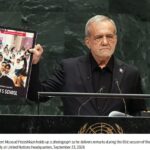
President Masoud Pezeshkian has evidently adopted more conciliatory language and sought talks to address the protesters’ demands, but hardline regime officials are reported to be pushing for a more aggressive and forthright response by regime security forces and paramilitary supporters.
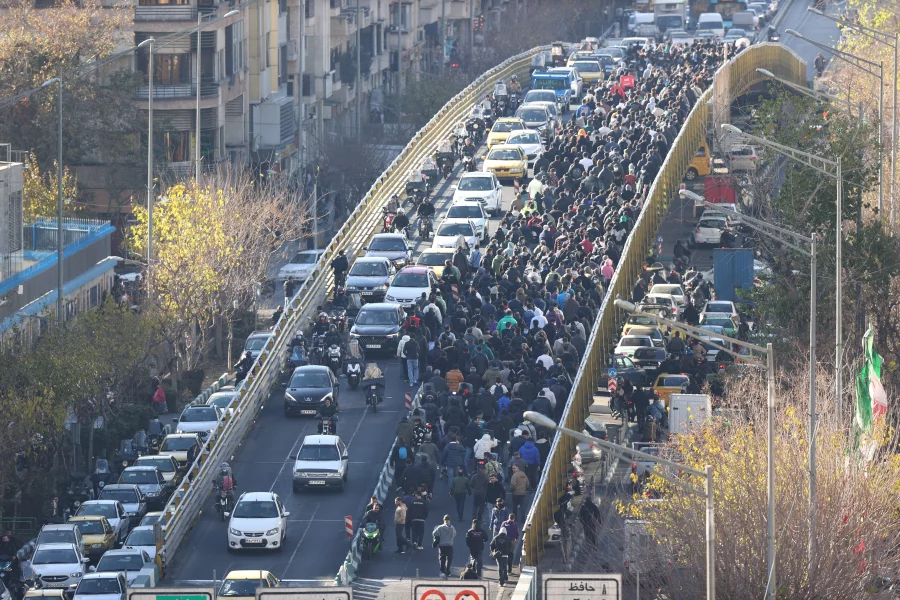
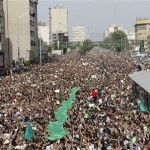
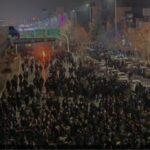
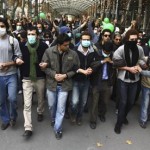
Footage and reports from on the ground published by Iranian citizen activists over the weekend indicate that the protests and accompanying labour strikes are growing, having spread from Tehran and the main cities to at least 170 separate locations in 25 out of Iran’s 31 provinces, causing serious concern among regime officials.
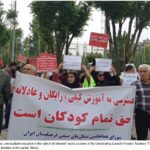
The Coordinating Council of Iranian Teachers’ Trade Associations (CCITTA), one of the country’s most prominent trade unions, has issued a statement supporting the nationwide protests and describing them as the “voice of seeking a life” on the part of a people who have nothing left to lose except the chains with which their livelihoods, dignity, and future are currently bound. The organisation also called upon the country’s military and security forces to immediately cease the killing and suppression of the people.
Bloody security crackdowns often follow protests of scale in Iran and have occurred with alarming frequency over the past decade. Unrest over a sharp rise in the price of fuel in November 2019 reportedly saw over 600 protesters, mostly young people, brutally killed. Three years later, the regime responded to the “Woman, Life, Freedom” protests by killing at least 500 people and detaining over 22,000 more. In the years since, there has also been a sharp increase in the number of executions carried out in Iran, which already had the highest rate per capita in the world, rising to the highest figures recorded since the late 1980s.
Office
Central Executive Council
CODIR