



 Posted in
By Ziba Akhavan, CODIR E-Newsletter, February 6, 2026
The quiet coastal capital of Muscat has once again become the most critical geography in the Middle East. After days of conflicting reports and a volatile fluctuation in the Iranian rial, the White House and Iranian Foreign Minister Abbas Araghchi have confirmed that a new round of high-stakes negotiations will begin this Friday. This meeting marks the first formal diplomatic contact between Washington and Tehran since the 12-day war in June 2025—a conflict that saw American fighter jets severely damage Iran’s three main nuclear facilities and effectively halt its atomic program.
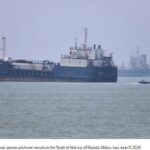
The American delegation, led by President Trump’s special envoy Steve Witkoff and joined by Jared Kushner, arrives in Oman against a backdrop of “gunboat diplomacy.” President Trump has moved a “massive armada” near Iranian waters, vowing military strikes “with speed and violence” if Iran does not yield to a comprehensive list of demands. These include a total freeze of the nuclear program, discarding enriched uranium stockpiles, reducing ballistic missile ranges, and ending the funding of regional militant groups. “Iran is going to have to sit down and talk because they have no other option,” said Sina Azodi, director of the Middle East studies program at George Washington University. “Donald Trump has taken the concept of gunboat diplomacy literally.”
The negotiations in Oman almost collapsed on Wednesday morning when Tehran balked at broadening the discussion beyond the nuclear file. However, following intense mediation by regional Arab countries and Turkey, both sides agreed to a bilateral format in Muscat. The stakes are immense: Washington is pushing for a permanent shift in Iranian regional policy, while Tehran is fighting for its strategic survival under the weight of maximum pressure and internal unrest. As Foreign Minister Araghchi expressed his gratitude to “our Omani brothers” for the arrangements, the world watches to see if Muscat can facilitate a framework for peace, or if the region is merely seeing the “eye of the storm” before further escalation.
Timeline: The Road from War to the Muscat Negotiations
June 2025: The 12-Day War
- June 13: Israel launches a series of preemptive airstrikes on Iranian nuclear and military facilities. Iran retaliates with massive missile barrages targeting Tel Aviv, Haifa, and Israeli airbases.
- June 22: Operation Midnight Hammer. The United States formally enters the conflict. Seven B-2 stealth bombers fly from Missouri to strike Iran’s three primary nuclear sites—Fordow, Natanz, and Isfahan. Initial intelligence suggests Iran’s nuclear program is set back by at least two years.
- June 24: President Trump announces a formal ceasefire, ending what becomes known as the “12-Day War.” Casualties are estimated at over 1,000 Iranians and 29 Israelis.
Late 2025: Internal Unrest and the Rearrest of a Laureate
- October 2025: Tensions rise as the “snapback” mechanism for UN sanctions approaches its expiration, with European powers (the E3) threatening to reinstate permanent sanctions.
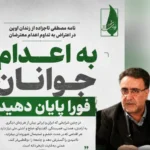
- December 12: Narges Mohammadi is violently rearrested in Mashhad while attending a memorial service for human rights lawyer Khosrow Alikordi. Her family reports she was beaten by plain-clothed agents, requiring emergency hospitalization.
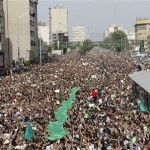
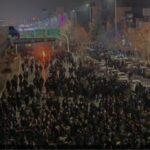
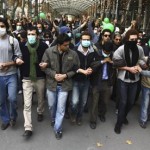
- December 28: Nationwide anti-government protests erupt across Iran, fueled by economic collapse and anger over the June war and internal repression.
January 2026: The “Bloody January” Uprising
- January 8–9: The “deadliest phase” of the crackdown occurs. A near-total internet blackout is imposed as security forces use military-grade weapons to suppress protesters.
- January 17: Supreme Leader Ali Khamenei acknowledges for the first time that “several thousand” have been killed, though activist groups like HRANA report the death toll has exceeded 6,800.
- January 31: Reports emerge that the Trump administration has moved a “massive armada” into the region, issuing an ultimatum for Iran to return to the negotiating table or face “total obliteration” of its remaining assets.
February 2026: The Brink of Muscat
- February 2: From prison in Mashhad, Narges Mohammadi begins a hunger strike, protesting her isolation and the lack of medical care for her heart and lung conditions.
- February 4: Negotiations in Istanbul are nearly cancelled after Iran requests a venue change to Oman and a bilateral format. Under pressure from regional allies (Qatar, Turkey, and Saudi Arabia), the U.S. agrees to the Oman venue.
- February 6 (Today): High-level talks between Steve Witkoff/Jared Kushner and Abbas Araghchi commence in Muscat. The world watches to see if a framework for a nuclear and regional security deal can be reached before the ceasefire collapses.