


 Posted in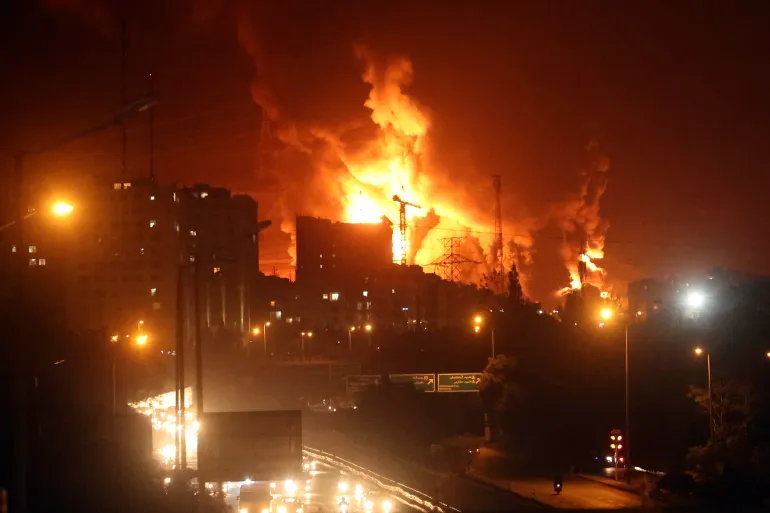
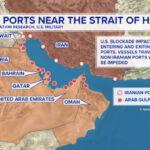
On Saturday (21 March) US President Donald Trump gave Iran a 48 hour deadline to open the Strait of Hormuz or the US would destroy Iran’s “various power plants, starting with the biggest one first!”
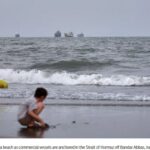
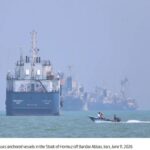
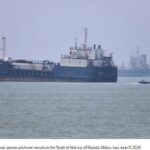
The Iranian response has been to threaten vital energy and desalination facilities in the Gulf region and to close the Strait of Hormuz completely. So far the Iranians have been allowing vessels from “none enemy” countries through the Strait.
Since the announcement on Saturday Trump has announced on 23 March the suspension of any action against Iranian power plants for five days, claiming that “very good and productive” conversations have taken place between the US and Iran regarding a “complete and total resolution of hostilities in the Middle East.”
The Israelis however may not have got this message, as a further wave of attacks by Israeli jets upon Tehran overnight was followed by Israeli Defence Force (IDF) spokesman, Brig Gen Effie Defrin claiming that: “We are expected to face several more weeks of fighting against Iran and Hezbollah. With each passing day, we are weakening the terror regime more and more. We will not allow the terror regime and its proxies to pose a threat to the State of Israel.”
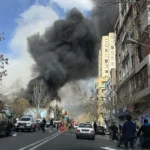
While the US and Israel are keen to emphasise the accuracy and precision of missile attacks the reality is that the three weeks of conflict have seen attacks upon oil refineries around Tehran; water desalination plants; electrical supply hubs and power plants; clinics/hospitals; schools; community centres; sports complexes; public parks and squares; as well as UNESCO-listed world heritage sites.
In spite of the increasing toll upon the civilian population, with over 1.200 estimated dead so far, the regime in Iran has made clear that it is not interested in a ceasefire or return to negotiations for the time being. The regime appears to be motivated to respond by exacting as high a toll on the US and Western countries as possible, in order to ensure that the cost of attacking Iran is seen to be prohibitively high, economically and politically.
There are also reports that the IRGC’s command structure has been decentralised, giving operational autonomy to commanders further down the chain and throughout Iran’s provinces. The security forces appear to be entrenching their positions throughout the country in anticipation of carrying on the fight regardless of what form it takes. It is reported this is pursuant to one of Ali Khamenei’s last directives before he was killed.
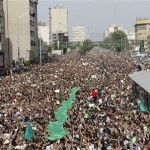
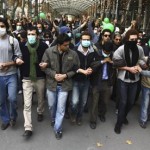
That the regime’s security forces and paramilitaries are still in control and exert a fearsome presence on the streets of Iran is reflected in the comments of Iran’s police chief, Ahmadreza Radan, who has warned that protesters will be treated as “the enemy”.
Speaking on Iranian state TV Radan stated,
“If someone comes at the enemies bidding, we do not regard them as a protestor or anything of the sort; we treat them as we would treat the enemy, and we deal with them the same way we deal with the enemy.”
CODIR Assistant General Secretary, Jamshid Ahmadi, underlined the solidarity organisation’s demand for an immediate ceasefire to end the suffering of the Iranian people.
“CODIR continues to be firmly against the theocratic dictatorship and its repressive measures against the Iranian people. We will also continue to oppose outside intervention by the US, Israel, or any proxy forces acting on their behalf”, said Mr Ahmadi, “a ceasefire in the first instance is a step towards ending the war which has been a disaster for the people of Iran. Its continuation will only add to their suffering.”
CODIR will continue to provide support and solidarity with progressive forces on the basis of the people’s demand for peace, democracy and social justice.