

 Posted in
The State, Employers, Workers!
According to a report from the Payam-e Syndika (Union/Syndicate Messenger), the structural unemployment of over three million Iranian workers during the course of the two wars [against Iran] in 2025 and 2026 – including the resumption in continuous bombardments of the country over recent days, resulting in countless workers sent home jobless – has prompted the Iranian working class to ask a fundamental question… Have either war or the subsequent ‘memorandum of understanding’ served to alleviate any of their pressing grievances?
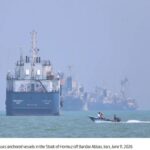
From the perspective of an impoverished worker in Iran, the ‘memorandum of understanding’ is not a triumph, but rather a risky gamble with their lives and livelihoods. For a worker who, during these hugely volatile days, must purchase daily staples at double their previous retail price and bear witness to items like bread being removed from the household/standard consumption basket, this agreement is viewed not as a diplomatic victory, but as a demonstration of institutional disregard for their basic livelihoods and means to survive. Thousands upon thousands of labourers, employees of barely functioning factories and industrial plants, fishermen whose vessels have been struck by enemy fire, and out-of-work sailors are now simply asking: “What has this agreement added to our table? What tangible benefit has [the Iranian government-instigated] two-million-dollar transit toll or selling oil at double the price brought to my life and wellbeing?”
Today in Iran, labour and small-scale capital have been rendered sacrificial lambs to the ongoing conflict and instability. A worker who, under these circumstances, is compelled to forfeit their right to secure housing, insurance, and a bare minimum subsistence no longer has any trust in institutional promises; they have only the core demands of peace, inflation control, and the restoration of job security. If the government fails to fulfil these three prerequisites, any proclaimed breakthrough is not a victory for the worker, but merely another smokescreen for the continued neglect of the country’s working class.
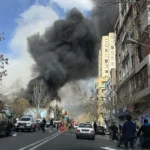
Workers have stood firmly and gambled with their lives, yet in many high-risk foundries and workshops [workplaces vulnerable to the ongoing military strikes against Iran], employers have continued to refuse to issue “hazard pay” [for the undertaking of dangerous jobs in active conflict zones], bonuses, or even basic remuneration. In industrial cities such as Mahshahr and Bandar Imam, a vast number of workers have been forced into the already swelling ranks of the unemployed due to damage inflicted upon complexes such as the Fajr and Amir Kabir petrochemical plants. Of course, in these instances, overtime pay and other workplace benefits were eliminated overnight.
More painful than the economic crisis itself is the cynical conduct of the regulatory institutions in Iran. Due to a structural shortage of labour inspectors, the country’s Ministry of Labour has essentially given a green light to exploitation in small workshops, while the Social Security Organisation has evaded the paying unemployment insurance to many workers directly impacted by the war through the creating of labyrinthine bureaucratic hurdles for claimants. Against this backdrop, women workers have suffered the most having found themselves at the very forefront of the mass lay-offs. The sole reward for the Iranian workforce’s resilience and self-sacrifice in the face of bombardment has merely been the permission to return to work – and nothing more!
The neoliberal and mafia-driven capitalist state, instead of seeking to alleviate the grievances of 99% of the Iranian populace, implements laws regulating vehicle imports across the Turkish border. Meanwhile, it has doubled the price of bread, rendered basic medicines extortionate and scarce, and left the hands of corrupt free market syndicates unrestrained to further plunder the Iranian people.
The Union of Metalworkers and Mechanics of Iran (UMMI) warns: Do not gamble with the people’s livelihood in order to enrich a select few. Undoubtedly, this behaviour will trigger widespread labour strikes and popular uprisings in the times to come, and the external enemy can no longer be blamed for these domestic failures.
We reiterate once more: Just as we unequivocally defend the independence and territorial integrity of our country, we will never forgive the mafia’s encroachment upon our livelihoods and we shall adopt exactly the same stance towards internal reactionaries as we do towards the external enemies of Iran.
The Editorial Board of the Payam-e Syndika
Thursday 16 July 2026