


 Posted in
Ervand Abrahamian
05 September 2026Politics
When you spoke to NLR earlier this year, Iran had just emerged from the repression of the January protests. How do you see the domestic situation after six months of war? How close is the country to another major social explosion?
There’s certainly hardship, but that’s not new. The sanctions have been there for so long. They were the underlying cause of the recent popular uprising. So that’s a long-term fixture. Whether economic hardship will lead to the fall of the regime is another matter. We know from other examples that sanctions, no matter how severe, fail to achieve this. Why did George W. Bush invade Iraq? Because years of sanctions were not sufficient to bring down Saddam Hussein. Similarly with Gaddafi. They tried it with Assad and that failed too. I think in the Iranian case, the hardships are going to be severe, especially for the lower and middle classes. But I don’t see this leading to regime change. The Revolutionary Guards are fully committed. It’s not a huge army capable of conquering neighbours, but it’s large enough to control the cities. In the past it has been willing to shoot down unarmed demonstrators.
To some extent the war has actually consolidated the regime. By the end of last year, when the unrest began, it had lost a lot of legitimacy because it had undercut its own social basis. The regime was left with the support of maybe 15 to 20 per cent of the population. But the war has given it a second life. Even those who despise the regime are quite proud of the fact that Iran has been able to match a major power – and in fact run circles around it. A parallel could be made with the Soviet Union. The Bolsheviks began with a good deal of legitimacy, but they lost it by the 1930s because of the great famine, the purges. Yet World War II gave the Soviets a second life, and this continued for generations. The Putin regime still tries to marshal the Great Patriotic War as a form of legitimacy. I think the Iranian regime will do the same thing.
The way this has been orchestrated so far – say with the funeral of Khamenei – shows that the regime is very institutionally established. Weber would be surprised to find that the United States, which was supposedly a modern state with an institutionalized bureaucracy, has become a sultanate, where the sultan makes decisions on his own, taking advice from household slaves or servants. That is one thing that strikes me reading the American press, especially the New York Times, which has actually been quite informative about the decisions made in Washington. It’s more like a Marx Brothers movie, the chaos there. The Iranian regime is very different. Despite being led by medieval theocrats, it is highly institutionalized. So even the decapitation of the leadership did not result in the collapse of the regime. I think that’s what the Israelis expected. Three or four days of bombing, they assured Trump, and it would fall. There would be regime change or – and I suspect this is what the Israelis really thought – the country would collapse into civil war. But that did not happen. The institutions survived, and they seem to be quite robust. I’m sure there’s a great deal of personal and political rivalry among the leadership, but they are still invested in preserving their republic.
On the economic situation, there have been reports that bread subsidies were recently cut, and that prices had doubled. That seems a risky policy.
Yes, but the regime are quite clever in terms of rationing supplies. There will probably be subsidies for the poorer segments of the population. Again, the institutions are very efficient. This was evident during the Iran–Iraq war in the 1980s too. The Mousavi government was good at making sure that there weren’t shortages. So far, despite all the hardship, there seems to be enough food and basic goods. There are parallels with the Mosaddegh period. The Western consensus was that the oil embargo would bring down the economy, but it didn’t. Even though Iran couldn’t export oil in 1951–53, it was mostly an agricultural economy and the harvests were good. So there was no real crisis that might have brought down the regime. Since 1979, the regime has always stressed self-sufficiency in basic goods. They can survive a great deal, because they can rely on domestic production and other ways of getting around the embargo. I don’t want to minimize the hardship, but I don’t think it is sufficient to destroy the regime.
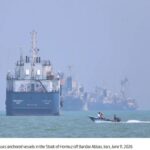
If they can keep selling oil, especially to China, there’ll be some revenue to cushion the economic crisis. They’re using other routes. And they have a lot of tankers outside the region. They don’t sell it at a good price, but at least it brings in some revenue. Again, they’re politically being quite smart, and were prepared for this. They have, I believe, the largest tanker fleet in the world, which can store and transport oil around the world, to sell it here and there.
There have been reports in the Western press of divisions within the Iranian leadership over the negotiations. What is your assessment of this?
Too much is made of those differences. One thing that the New York Times harps on about is that the real problem in the negotiations are the hardliners in Iran. This is false. Historically, the hardliners have always been willing to come to a settlement with the United States. Khomeini, even as he was denouncing the United States and Israel as satanic, was quite Machiavellian behind the scenes. Just remember Irangate. Similarly with the elder Khamenei. Despite all the rhetoric, his representatives were willing to negotiate and come to an agreement. One has to separate Tehran’s rhetoric from its actual policies. I think the so-called hardliners today would be willing to come to an agreement if they could trust the other side.
And you don’t have to be a hardliner to distrust Trump. What sort of agreement can you reach with someone who is not trustworthy? He might make a deal and then the next day tear it up and say he’s changed his mind. On the basis of the 17 June memorandum, the understanding in Washington was that Iran would open the Straits, and then the Americans would go to the next stage of lifting sanctions and letting Iran sell oil. But the Iranians could see through that. They would be giving up their trump card. Once they opened the Straits, Trump could make other demands or refuse to honour commitments, saying, no, that wasn’t part of the deal. I’m sure there were people like the president, Pezeshkian, who were more in favour of the agreement, but it would be difficult for him to convince the others that Trump is someone you can trust.
Where would you say the majority of the Iranian population stand on this question, with Pezeshkian or with the hardliners?
The majority may be with Pezeshkian, because they have a flawed understanding of the situation. Again, it’s a repeat of the Mosaddegh period. A lot of Iranians thought that if Mosaddegh was willing to compromise, everything would be fine. They didn’t realize that the US and Britain never wanted a compromise; they wanted control of the oil. But there was effective propaganda saying otherwise. Today there has been a concerted effort to say that the US has nothing against Iran; that it is the Iranian regime that has been intransigent. And many people in Iran have their own reasons for disliking this regime. So it is easy to blame it for the impasse.
In February, you spoke about the effect of the Iran–Iraq War in consolidating the nascent Islamic Republic. Do you see similar dynamics playing out today? Might the rally-round-the-flag effect prove to be short-lived?
So long as the conflict with Iraq was seen as a defensive war, it had a rallying effect. But once Khorramshahr was liberated and the decision made to go into Iraq, the slogan became ‘war, war until victory’, and ‘the road to Jerusalem runs through Baghdad’. That undermined the regime. What’s not well known is that the admiral of the fleet and quite a few commanding officers in the regular army were against continuing the war. They handed in their resignations, which weren’t accepted. Their argument was, if you continue the war, this will bring the United States in. It will strengthen imperialism in the region, and that will not be in Iran’s interest. But the decision was made by the Revolutionary Guards and the adventurers around Khomeini, that this was an opportunity to expand the revolution. Today, the hardliners in Tehran aren’t thinking of spreading the revolution. They’re thinking about defence. Public perception is important – they don’t want to seem intransigent, although they have good reason to be. They want to show that they’re willing to come to an agreement, and that the failure so far is the fault of the other side. That is why I think they entered the memorandum. If a real offer were made, they would be under public pressure. But they don’t want to look like they are being taken for a ride.
What is your assessment of the shake-up of the Iranian leadership in the wake of the Israeli and American assassinations of senior leaders? How should we understand the recent appointments Mojtaba Khamenei has made?
I want to first just touch on the killing of the elder Khamenei. It was really a mafia-style killing. The morning Khamenei called a family meeting, an open family meeting, happened to be exactly the same time that Iranian and US representatives were meeting in Geneva to negotiate. Khamenei’s misreading was to think that since we’re in the middle of starting negotiations, they’re not going to bomb us. So he called this family meeting, and they not only killed him, they killed his daughter, his granddaughter, his son-in-law and daughter-in-law. The mafia, at least, has red lines. My sense is that Mojtaba was badly injured in the bombing, so they don’t want to show him to the public. But he’s still mentally capable and making the final decisions. There is also an echo of early Islamic history, of the Hidden Imam. He doesn’t have to appear; his spokesman can speak for him.
As for the appointments, for a long time Mojtaba was his father’s right-hand man for dealing with the military and with national security. He formed personal relationships, and he’s put those people in charge. It’s not a question of hardliner or moderate. It’s much more a question of who he trusts; it’s very much an in-group phenomenon. People see these men as products of the Revolutionary Guards and the clerics. But they also basically represent the petit bourgeoisie in Iran, the bazaar class. If you look at their backgrounds, they come from that class. They’re intermarried, it’s a fairly close-knit group.
How do you explain the Americans and Israelis’ success in locating and killing their targets?
It’s not hard to figure out where someone lives, that’s easy to do. People jump from that to overrating Israeli intelligence. They may know the personnel, who is who and where to find them. But their understanding of Iran is bizarre. To give you some examples: in the June War, they dropped leaflets in Hebrew, inciting the Jewish minority in Tehran to rise up against the Republic. I can’t imagine anything more irresponsible than that. Similarly, the conviction that four days of bombing was going to bring down the regime involved, again, a complete misunderstanding. We also now know that their candidate to bring to power was Ahmadinejad. What could be more bizarre? Now the regime has got him under tight control, and they’re using him to show that everyone is behind them. At some point they’re going to have to deal with him. I don’t think they can disregard the fact that he was dealing with the Israelis to overthrow the regime. There’s a lot of bad blood between him and the clerical hierarchy from his time as president. I would say his days are numbered.
Trump initially said that the Israelis had killed their opposition leaders-in-waiting. Perhaps they had other people in mind as well as Ahmadinejad?
I don’t think Trump would have known who’s who in Iran. He may have read that someone like Larijani, who was hardly a liberal – a diehard conservative in fact, though he had negotiated with Obama – had been killed. He probably thought these were the candidates that Israel planned to deal with. So he put two and two together and got five. This illustrates a key issue, which is that in Washington there are not really people who can reliably inform the President. So he listens to people like Netanyahu. His Vice President may not have liked the idea of going to war with Iran, but he didn’t have the arguments to prove to Trump that it was a bad idea. Again, the New York Times was actually quite informative here. In a well-functioning government you would have a task force who would be able to provide a memorandum addressing the situation. What are the dangers of going to war? What are the costs? What are the alternative options? There is no such thing today in Washington. In fact, I doubt there’s a single Iran expert that is listened to in the White House.
How would you assess Iran’s military performance? In the first couple of months of the war, the Americans and Israelis were quite triumphalist. Since then, however, US intelligence has confirmed the destruction of only about a third of the Iranian missile arsenal, while six months of operations have eaten up a large portion of American stocks of interceptors and other munitions.
Israel and the US made a big deal of the fact they had sunk Iran’s fleet. They had destroyed its air force. But the fact is there wasn’t much of a fleet to sink. The air force was also pretty minimal. Iran has always relied on short- and medium-range missiles. The drones have been a surprise. They are cheap and easy to make. The New York Times said that each drone costs $30,000, then reduced it to $10,000. I’ve seen an Iranian economist in the diaspora put the cost at $4,000. Each American missile that brings down a drone costs $1 million. So $1 million against $4,000 seems like a good exchange for Iran. And they can produce these drones at a mass scale.
If you look at Orientalist writings from the nineteenth century onwards, it was always argued that Western militaries are more efficient because they delegate authority to local officers on the ground, whereas Oriental armies are incapable of doing that – everything has to be tightly controlled from the centre. What the war has shown is that Iran is very capable of delegating authority. However much damage you do to the bureaucracy in Tehran, officers in the Gulf with their drones can still function pretty well. It turns out that the Orientals may be more efficient at delegating than the West.
You’ve suggested that Israel’s – and therefore America’s – real aim was less regime change than the dismantling of the Iranian state along ethnic lines. What remains of this prospect in your view?
I’m not sure anyone in the White House has really thought about it. But yes, I think this was the Israeli agenda – the dismantling of Iran, as in Iraq, Syria, Libya. The Ahmadinejad option may have fit into that, because nothing would be a better recipe for civil war in Iran than having him as president. This gives more ammunition to those in Iran who say that this is a war of existential survival – because their adversaries don’t just want to get rid of the regime, they want to destroy the country. I’m surprised they don’t use this argument more. A lot of the public thought that Trump was genuinely concerned about protesters being killed, that he was going to come and save them from the regime. The monarchists thought that the Shah was going to be brought back. The Mujahedin thought that they were the candidates. But they all quickly discovered that the Israeli agenda was very different.
What do you think the Iranian strategy is at this point, and how likely is it to succeed?
The strategy is essentially to prolong the crisis, I think. Hopefully, from their perspective, there will be a change in Washington that brings someone more reliable, with whom they could make an agreement. They think that is possible if the present crisis continues. The oil prices are not going down. They’re going to continue going up. Trump tries to keep them down by saying that we’re about to get an agreement, or they’re about to surrender. Sooner or later, Wall Street is going to realize that this is not a crisis that’s going to end anytime soon. Oil prices, but also gas prices, fertilizers – these prices are going to remain high, which is going to hit American pockets. That will be felt in the elections.
What lessons do you think the Iranian leadership has drawn from the experience of the past eighteen months? Has it bolstered the position of those who argue that Iran ultimately needs a nuclear deterrent, or instead strengthened the case for retaining a latent capability but stopping short of weaponization?
I don’t buy the argument that the regime was interested in nuclear weapons. There was a short period where international surveyors concluded that Iran was interested in acquiring one, when Washington was claiming that Saddam Hussein had weapons of mass destruction. If you were sitting in Tehran, and Saddam had already used chemical warfare on you, then I’m sure many people, even moderates, came to the conclusion: if the Americans are convinced that Saddam has nuclear weapons, we better do something. So they were, I think, exploring the issue of nuclear weapons at that time. But international inspectors concluded that this stopped as soon as the US invaded Iraq and it became clear that Saddam had no nuclear weapons programme. What Tehran was doing was building up knowledge and enrichment for research, which could be turned into weaponry in future if necessary. So when Obama came in and said we’ll agree with you doing research as long as you can guarantee, with supervision, that you’re not planning to weaponize, they accepted this. Even the so-called hardliners. That to me is proof that they were not really interested in weaponizing.
Remember that even when Trump pulled out of the deal, Iran continued to abide by the restrictions and the supervision, hoping that the Europeans would step in. After all, the Europeans were part of the agreement. It was only once they saw that the Europeans weren’t going to do so that they went up to 60 per cent uranium enrichment to try to force them back to the negotiating table. The reality is that the regime has been willing to negotiate on the nuclear issue. It has always been the West that has been intransigent. The demand of Israel and the West has always been that the Islamic Republic should have no nuclear research whatsoever – the exception was the Obama administration. As long as that’s the demand, I don’t see how even the moderates in Iran would be able to reach an agreement.
In your view, the events of the past year and a half haven’t altered this underlying calculation?
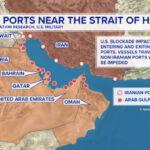
The Strait of Hormuz has given Tehran a better trump card. It is far more useful for them than having a nuclear weapon. And I think this will have long-term strategic effects. After the revolution, Iran looked much more towards the Mediterranean, the Levant, the Syrian axis, the Hezbollah axis, Israel. Yet the two recent wars have shown the Iranian leadership that their real strength lies in the Gulf. By contrast, in the Levant they had to make a lot of sacrifices without much concrete success. So I think there is going to be a reorientation of their grand strategy, and this will have implications for Hezbollah, for Israel. Ironically, this is very reminiscent of the Shah. His primary interest was in becoming the big honcho in the Gulf, and maybe also the Indian Ocean. He was building up a large navy and taking over uninhabited islands in the Gulf. The current regime has basically ended up in the same position. I’m not sure how much this has been conceptualized, but that is the logic of what is unfolding.
Do you think the odds are that this on-off war will continue for a long time?
Or worse. Because once it becomes clear that the only way out is for Trump to lose face, I think he might escalate hostilities after the midterm elections, in the belief that this might bring him some sort of victory. And there is another issue. Russia is now very much bogged down in Ukraine. But if that were to change, there is a 1921 agreement between Russia and Iran. Much of Soviet foreign policy was essentially based on the 1921 agreement, which stipulated that if a third power invades Iran, Russia has the right to send in troops. This is not often discussed, but this was the main umbrella Iran has always had against the West. In 1951, Britain was ready to invade southern Iran to take back the oil. What stopped it was the realization that if they did, the Russians had an international right to intervene. At the moment it’s not applicable because the Russians are mired in Ukraine. But if that situation were to change, any invasion of Iran might bring in the Russians, or give them the right to interfere.
One scenario would be the continuation of hostilities, with the Iranians banking on regime change in Washington, the US that by continuing the naval blockade, Iran will crack before the price of oil sends the international economy into a tailspin. Another, which seems fairly remote, would be a US ground operation of some kind.
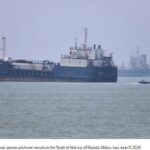
The problem for the Americans is, if the regime can continue as it is without cracking, then what’s the next step? Logistically, I’m not sure the US is capable of taking over the Gulf. Look at the pictures of the Strait of Hormuz. It reminds me of Gallipoli in World War One. And I’m not sure that oil prices in the West will remain below $100 a barrel. Once the business community realizes that Trump is basically conning them into thinking that the issue is about to be solved or under control, the prices could go haywire. Countries like the Philippines, Indonesia, Myanmar, India, they are very dependent on Gulf oil. And Americans are so dependent on driving that when petrol hits $5 a gallon, it really hits people’s pockets. The prices will go up. The question is how much Wall Street can bear: $120, $130 a barrel? So far, they’ve been able to control it, but I’m not sure, with the continuation of the crisis, they can do so indefinitely.
So Iran would seem to be in a strong position?
I don’t think it’s by their design. It’s thanks to the stupidity of those in Washington.
Read on: Ervand Abrahamian, ‘Iran Under Fire’, NLR 157.