





 Posted in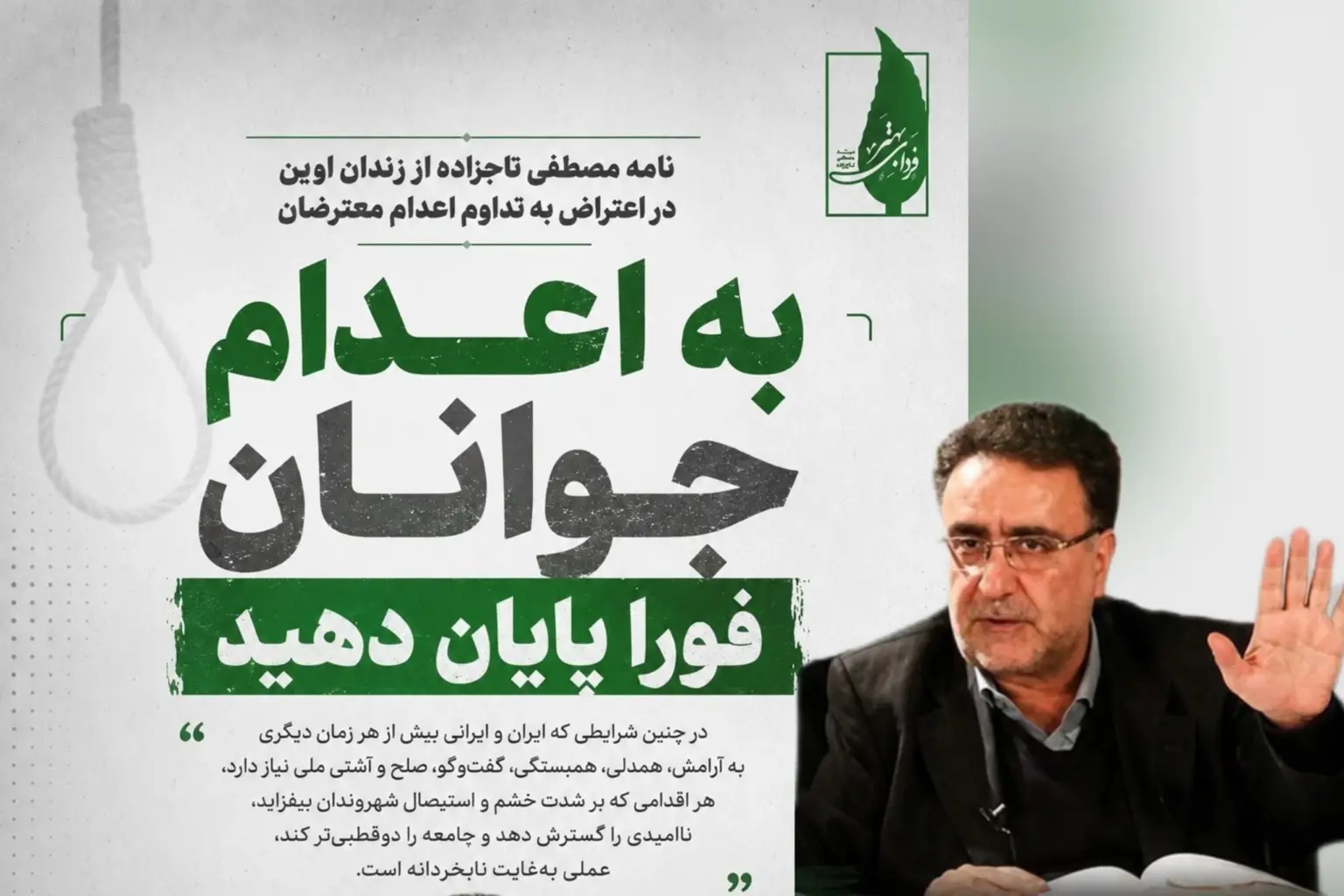
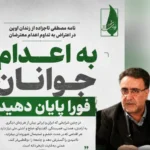
From inside Tehran’s notorious Evin Prison, prominent reformist turned outspoken dissident Seyyed Mostafa Tajzadeh issued an urgent open letter calling on Iranian authorities to immediately cease the execution of young protesters and political activists.
The statement addresses the accelerated pace of hangings following the nationwide demonstrations that erupted in January 2026. Please see the text below:
A Warning Against “Playing with Fire”
Tajzadeh’s statement, released via his public Telegram account, draws a direct connection between the state’s judicial crackdown and a deepening national crisis. Warning that fast-tracked executions of young citizens are “playing with fire,” the former deputy interior minister cautioned that hasty, secretive trials risk pushing Iran toward irrecoverable societal collapse, internal conflict, and the “Libyanization” of the state.
Tajzadeh dismantled official arguments that capital punishment serves justice or deters unrest. Key pillars of his declaration include:
- Denunciation of Flawed Due Process: He highlighted that Revolutionary Courts rely on forced confessions, denial of independent legal representation, and expedited proceedings that bypass basic standards of fair trial guarantees.
- Demand for Restorative Justice: Advocating for a transition away from state retribution, Tajzadeh called for an independent national fact-finding committee to investigate the casualties of the January unrest and stressed that halting executions does not dismiss victims’ rights, but protects the broader fabric of society.
- A Call for Civic Unity: He urged Iranians across all political, social, and ideological spectrums to unite in peaceful opposition to capital punishment through legal and civic avenues.
Galvanizing the Movement Against the Death Penalty
Tajzadeh’s intervention carries unique moral authority because of his trajectory from a high-ranking insider within President Mohammad Khatami’s administration to an uncompromising political prisoner. His letter has resonated deeply across Iran’s fractured opposition and civil society:
- Bridging Ideological Divides: By framing the abolition of state executions not merely as a human rights issue, but as a practical imperative to prevent national disintegration, Tajzadeh bridged the gap between traditional reformists, radical secularists, and youth movement activists.
- Amplifying Prison Resistance: The letter provided critical moral backing to the widespread “No to Execution Tuesdays” campaign—a weekly hunger strike movement spreading across dozens of Iranian penitentiaries. Tajzadeh’s defiance behind bars underscores the reality that Iranian prisons have transformed into centers of strategic political resistance rather than silence.
- Elevating International Pressure: Coming alongside urgent appeals from the UN High Commissioner for Human Rights and the UN Fact-Finding Mission on Iran, Tajzadeh’s statement reinforces international efforts to hold Revolutionary Court judges accountable.
Ultimately, Mostafa Tajzadeh’s letter reinforces a growing national consensus among Iranian society: that a state cannot execute its way to stability, and that ending capital punishment is an essential first step toward any peaceful democratic future.
(For the English translation of full statement issued by Mostafa Tajzadeh, please write to CODIR at CODIR.executive@gmail.com)