



 Posted in
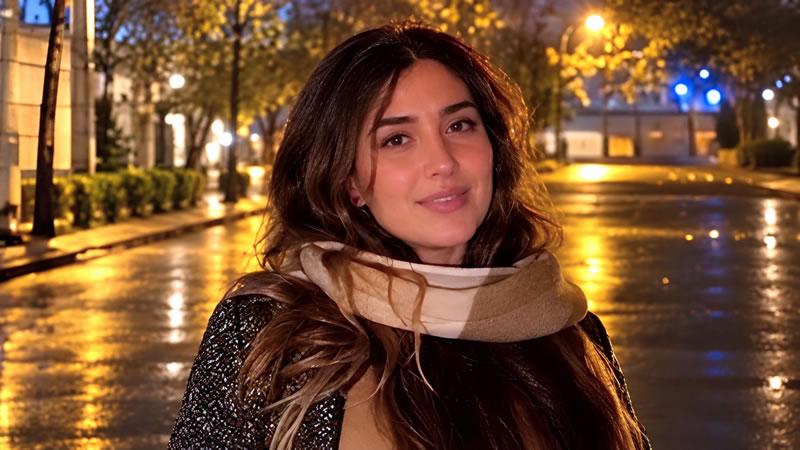
CODIR Protests Against Iranian Defence Attorney, Bahareh Aghaei, Being Sentenced to 26 years Imprisonment For Practising Law!
Heavy Sentence Imposed on Attorney Due to Protest and Media Activities26-Year and One-Month Prison Sentence Handed Down to Bahareh Aghaei
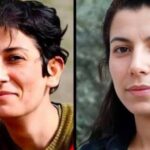
The issuance of prison sentences totalling 26 years and one month for Bahareh Aghaei, an attorney-at-law and international law student at the University of Tehran, has once again drawn attention to the Islamic Republic judiciary’s crackdown on the January 2026 protesters and their defence counsel. Fresh details of the case, published on Monday, October 26 by the Tasnim News Agency, indicate that the principal portion of the imprisoned attorney’s sentence pertains to media and propaganda activities attributed to her—activities that human rights organizations have described as related to supporting protests and the families of those killed.
Bahareh Aghaei is currently incarcerated at Qarchak Prison in Varamin. Branch 26 of the Tehran Revolutionary Court, presided over by Judge Iman Afshari, imposed three separate penalties on her: 20 years and one month in prison on charges of “media and propaganda activities against national security,” five years on charges of “assembly and collusion against national security,” and one year on charges of “inciting and encouraging others to commit violent acts.”
While the aggregate total of these sentences is 26 years and one month, under statutory rules governing multiple convictions, the mathematical sum of the sentences does not necessarily mean all of them will be served consecutively. According to Tasnim, the judgment has not yet become final and remains subject to appeal before the Supreme Court.
From Supporting Protesters to Arrest and Qarchak Prison
According to a report by the Hengaw Human Rights Organization, Bahareh Aghaei was arrested on the evening of April 4, 2026, following a raid by security forces on her residence. In addition to searching the home, officers confiscated her mobile phone and the electronic devices of her family members.
The attorney was initially transferred to an Intelligence Ministry detention facility and subsequently moved to Qarchak Prison in Varamin. Human rights reports indicate that she was held in solitary confinement for at least 15 days and undertook a hunger strike on one occasion to protest the conditions of her detention.
The Human Rights Activists News Agency (HRANA) reported in August that despite several months having elapsed since her arrest, Aghaei remained in a state of judicial uncertainty, and her family’s efforts to secure her temporary release on bail had proven unsuccessful.
Following her arrest, Aghaei’s family was unaware of her whereabouts for nearly two weeks.
Participation in Protests and Memorial Services for the Deceased
The human rights media outlets have reported that the activities cited in Aghaei’s case file include supporting the January 2026 protests on social media, participating in gatherings, and assisting the families of victims.
During the protests, she had expressed support for demonstrators by publishing posts on social media. Security forces had also captured photos and videos of her attending the fortieth-day memorial service of Sepehr Shokri, one of the victims of the protests.
Tasnim’s Narrative: Private Messages Used as Case Evidence
On October 26, in a report titled “Details of Bahareh Aghaei’s Case,” the Tasnim News Agency published the judiciary’s narrative regarding the attorney’s charges.
The news agency claimed that Aghaei had maintained contact with foreign-based media outlets and participated in disseminating news about the protests. Tasnim also reported that the court utilized content extracted from her mobile phone and her social media activities as part of the evidence in the case.
In a published statement, the Progressive Student Association (Tashakkol-e Daneshjuyan-e Pishro) objected to Tasnim’s publication of screenshots of Aghaei’s private messages. The association stated that the published messages, rather than proving the commission of a crime, reflected her efforts to record and report events unfolding on the streets of Tehran.
In one of the messages attributed to Aghaei by the association concerning the events of Friday, January 9 (Day 19) in Tehran’s Sattarkhan and Sadeghieh neighborhoods, she wrote:
“Sattarkhan and Sadeghieh were a war zone on Friday, January 9. Someone standing right next to you would suddenly get shot and drop… It was truly terrifying… All the gunfire used live ammunition.”
The publication of an accused individual’s private messages prior to a final judgment also raises serious questions regarding privacy, the confidentiality of case information, and the right to a fair trial.
While Tasnim’s report put forward the judiciary’s allegations concerning Aghai’s ties to foreign media and her political motives, these claims cannot be treated as established facts without independent review of the documents, the defense’s arguments, and the judicial proceedings.
The Law Intensifying Penalties for Crimes Against National Security and the 20-Year Sentence
A significant aspect of Bahareh Aghai’s case is the court’s reliance on the “Law Intensifying Penalties for Crimes Against National Security.”
According to a report by HRANA, Branch 26 of the Tehran Revolutionary Court cited Article 4 of this law in issuing the 20-year prison sentence. A subsequent report by Tasnim also confirmed the invocation of Articles 4 and 6 of the statute.
Consequently, the vast majority of the penalty determined for Aghaei stems not from charges of committing acts of violence, but rather from “media and propaganda activities against national security.”
This issue is of particular importance from the perspective of civil rights, as it establishes a critical line in the case between media activity, the expression of political views, reporting on protests, and criminal acts against national security.
The mere publication of news, the recording of protest footage, or the expression of political dissent—without establishing the specific elements of a crime and adhering to procedural safeguards—cannot by itself constitute a sufficient basis for such a severe punishment.
Nevertheless, the full text of the court ruling and the defence briefs submitted by Aghaei’s lawyers are not publicly available, making a definitive assessment of the legal reasoning in the case impossible without access to these documents.
Pressure on Independent Attorneys
Bahareh Aghaei’s case is not an isolated individual matter; it occurs within the broader context of escalating pressure on defence attorneys and human rights defenders.
According to reports, at least 135 lawyers in Iran have faced arrest, summons, imprisonment, or professional restrictions over the past year.
Under such conditions, the heavy conviction of a lawyer who, according to human rights organizations, engaged in activities supporting protesters and justice-seeking families heightens concerns regarding the erosion of the independence of the legal profession.
The significance of this issue extends far beyond the fate of a single attorney. When legal advocacy or reporting on protests carries the risk of long-term prison sentences, citizens’ access to legal representation and the independent documentation of events are severely compromised.
Calls for Annulment of the Sentence and the Release of Bahareh Aghaei
In a released statement, the Progressive Student Association condemned the prison sentences totalling 26 years and one month handed down to Bahareh Aghaei, demanding her immediate and unconditional release.
The association also criticized the publication of private messages and the use of media and protest activities as evidentiary support for criminal charges, describing the issued sentence as indicative of intensified judicial crackdowns on students and protesters.
While Aghaei’s sentence is not yet final, critical questions remain regarding the legal basis of the conviction, the methods by which private data was accessed, the possibility of effective defence, and the proportionality of the punishment relative to the alleged conduct.
Bahareh Aghaei’s case has now emerged as a notable example of the judicial handling of activists and attorneys linked to the January 2026 protests—a case whose outcome holds profound implications not only for the imprisoned lawyer herself, but also for the state of freedom of expression, the right to protest, and the independence of the legal profession in Iran.