


 Posted in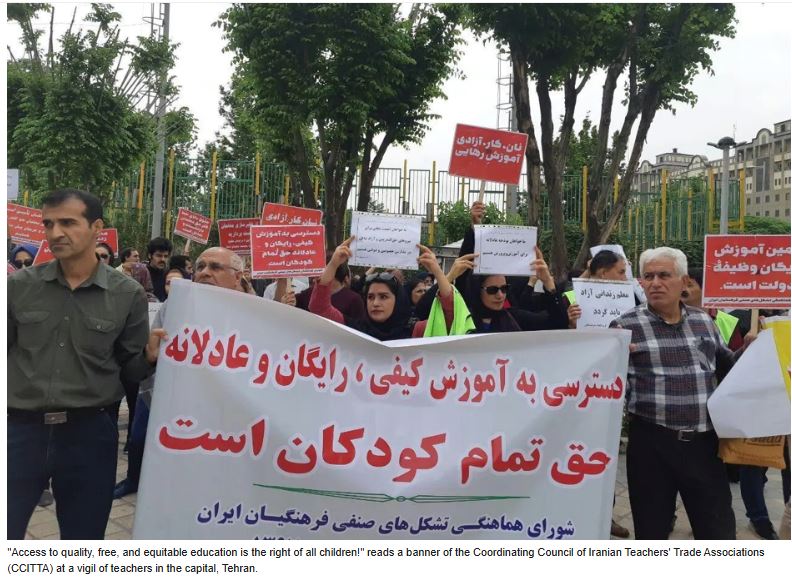
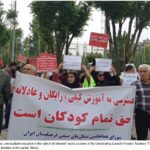
Tuesday 6th October 2026 – In a statement marking World Teachers’ Day – referencing the 60th anniversary of the joint ILO/UNESCO Recommendation Concerning the Status of Teachers – the Coordinating Council of Iranian Teachers’ Trade Associations (CCITTA) in Tehran declared that the current situation faced by teachers across Iran represents an acute “multi-layered crisis” with livelihood, professional, and civic dimensions.
The statement notes that Iranian teachers’ salaries have consistently lagged behind the cost of living in the country, which combined with an eye-watering level of inflation [currently at around 85%] and increasingly unbearable economic and professional pressure is causing teachers and educators to leave the public education sector in their droves. Additionally, the CCITTA (Tehran) statement highlighted extreme centralisation within the state education sector and the exclusion of teachers from the decision-making process as core structural problems facing Iranian education.
CCITTA (Tehran) also criticised the security apparatus’ crackdown on teacher activists, citing multiple arrests, summonses, prosecutions, and restrictions on independent organisational/union activities as part of the systemic pressure currently being placed on the teaching community in Iran. The statement emphasised that the suppression of independent trade union bodies must cease, and that imprisoned teachers along with other labour union activists be released forthwith.
The Tehran Teachers’ Trade Association criticised the continued reduction of the education budget in real terms; decaying and weak school infrastructure; the shortcomings of remote learning, including continued internet filtering and disruptions; and the escalating pressures on students and families resulting from the ongoing war and economic crisis in Iran. According to the organisation, these conditions have led to a decline in educational quality, the demotivating of students, and a sharp increase in dropout rates.
In another section of the statement, Iran’s educational system was accused of “ideological surveillance”. The association called on the government to reduce political interference in the country’s education and to tone down ideological content in textbooks, urging that schools be transformed into spaces for critical thinking, inquiry, and free dialogue.