


 Posted in
On the evening of Saturday, November 14, 2026, a commuter bus carrying employees of the Dehloran Petro-Refinery Complex (affiliated with the NGL 3100 project) overturned along the Dasht-e Abbas–Murmuri road between Abdanan and Dehloran in western Iran’s Ilam province. Thirteen workers lost their lives and 17 others were injured, turning a routine end-of-shift commute into one of the deadliest industrial transport disasters in the region this year.
What began as collective grief in the predominantly Kurdish town of Abdanan rapidly evolved into a sharp indictment of corporate negligence, crumbling infrastructure, and state repression. For workers and residents alike, the crash was not viewed as an isolated accident, but as the predictable outcome of systemic disregard for worker safety.
Systemic Neglect in Worker Transportation
In the aftermath of the crash, public anger zeroed in on the operating company—identified in local reports as OICO, which serves the NGL 3100 natural gas liquids facility—and its transport contractors. Despite generating substantial state revenue from oil and gas extraction in the borderlands of Ilam province, employers in the sector have long faced criticism for outsourcing employee transit to third-party contractors operating aging, poorly maintained vehicles.
Relatives of the victims and fellow refinery workers pointed to a chronic lack of basic safety oversight:
Substandard Fleet: Commuter buses servicing remote oil and gas installations are frequently outdated and suffer from deferred mechanical maintenance.
Hazardous Transit Corridors: The Dasht-e Abbas–Murmuri stretch is notorious among locals for poor road conditions, inadequate signage, and insufficient safety barriers.
Deflection of Responsibility: Rather than addressing structural failures in fleet procurement and workplace safety standards, official investigations quickly narrowed blame onto the individual bus driver, the transport contractor, and local road maintenance bodies—a pattern critics say shields senior refinery management and state-linked energy enterprises from accountability.
From Mourning to Street Protests in Abdanan
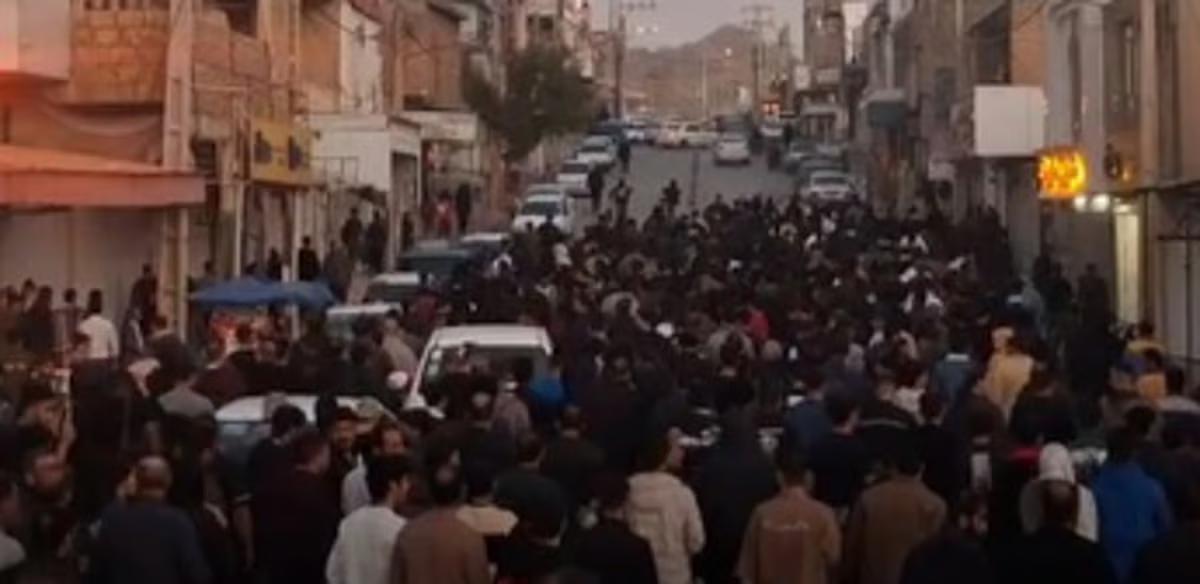
Grief quickly coalesced into organized public action. In the days immediately following the crash, shopkeepers across Abdanan shuttered their businesses in solidarity with the bereaved families.
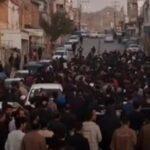
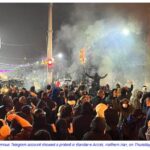
On Tuesday, November 17, following the funeral of one of the slain workers, hundreds of residents and colleagues marched through the streets of Abdanan. Even semi-official outlets such as the IRGC-affiliated Fars News Agency acknowledged that the crowd swelled from an initial gathering of roughly 200 to 300 people to around 1,000 demonstrators.
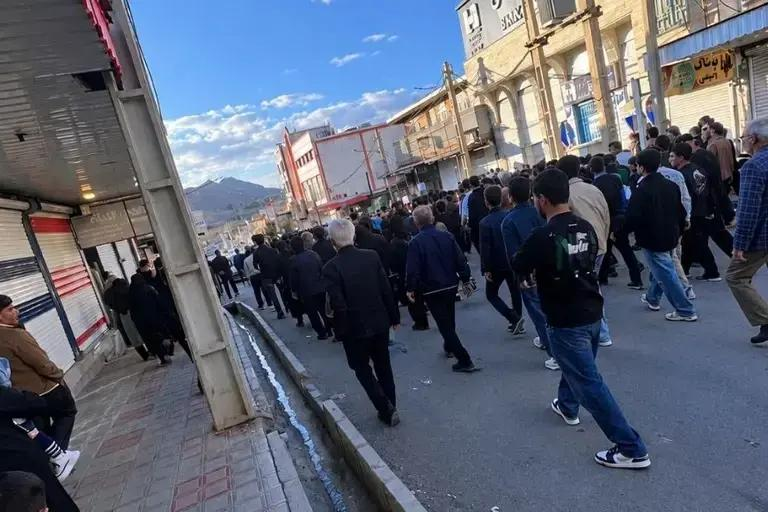
While protesters initially demanded the resignation of negligent refinery officials and justice for the victims, the slogans quickly broadened into explicit anti-government chants—including “Death to the dictator” and “Poverty, corruption, high prices—we will fight until overthrow“—alongside protesters tearing down state security banners. The demonstrations marked one of the most significant public outbreaks of political dissent inside Iran since the outbreak of war and 10 month old US- Israeli devastating military attack on Iran on 28 February 2026, underscoring that wartime conditions have not extinguished deep-seated public grievances.
Heavy Security Deployment and Crackdown
Recognizing the volatility of Abdanan—a city that had already served as a prominent flashpoint during the nationwide protests of January 2026—Iranian authorities moved swiftly to contain the unrest.
Over the past several days, a heavy security atmosphere has enveloped Abdanan County. According to human rights monitors, including the Kurdistan Human Rights Network (KHRN) and HRANA, special police units and Basij paramilitary forces flooded the city’s streets, firing tear gas to disperse demonstrators. Simultaneously, authorities disrupted internet access across the county to restrict the flow of footage and prevent protests from spreading to neighboring towns.
Security forces arrested at least six citizens during the November 17 crackdown, including a 15-year-old boy, Sina Darvishi. While Darvishi and one other detainee were released after several hours of interrogation, the whereabouts and legal status of the remaining four detainees remain unknown. Meanwhile, the local security council issued stern warnings against further gatherings, and state authorities staged counter-rallies in an effort to project control.
A Precarious Standoff
The events in Abdanan illustrate how acute local failures—such as the preventable deaths of 13 workers on an unsafe company bus—can rapidly pierce the veneer of wartime calm. While heavy policing and communications blackouts have temporarily cleared the streets, the underlying grievances remain unaddressed: workers continue to commute on hazardous roads in aging vehicles, and a grieving community faces intimidation rather than institutional accountability.