



 Posted in
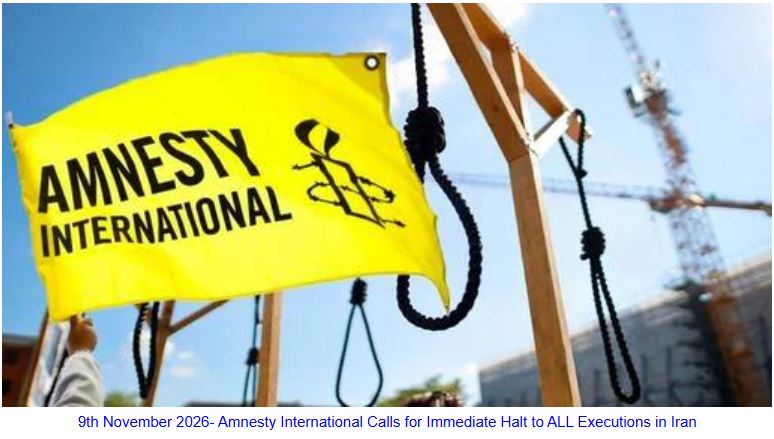
Joint Statement by 29 Iranian Political and Civil Activists on the Necessity of the Immediate Cessation of Executions
It is with profound regret that a number of detainees from the January 2026 protests have thus far been executed, with the heaviest measures concentrated around the highly contested case of the “Alikhani Square in Isfahan.” These individuals have been subjected to the blade of execution without the benefit of a fair trial, leaving yet more families in mourning. In recent months, and in the aftermath of the war, the cycle of political-ideological executions has accelerated at an alarming pace, reaching unprecedented boundaries. These sentences have been issued and carried out in courts devoid of justice, against the backdrop of politically driven operations and the complete lack of independence of the judiciary, alongside its institutionalized subservience to the apparatus of power. Furthermore, historical precedents of forced confessions do not, in and of themselves, lend any credibility to the videos or statements attributed to those executed, nor remains it clear under what duress these confessions were extracted.
In effect, while these verdicts have been rendered in closed courts shielded from the public eye and the media, the execution of the death penalty itself has been carried out publicly; the condemned are predominantly introduced by the media only hours after they have been hanged. Does this process signify anything other than the fact that terrorizing society through the political and instrumental use of the judiciary constitutes the primary objective of the decision-makers and executors of this project?
We, the signatories of this statement—each viewing the issues of Iran from distinct and pluralistic political and discursive horizons—unanimously and in unison raise our voices: capital punishment, particularly amidst political conflicts and ideological confrontations, must be brought to an end. Executions and lethal punishments have long constituted an enduring link in the chain of violence throughout contemporary Iranian history. Capital punishment—even when applied to individuals accused of collaborating with foreign states or in espionage cases—neither resolves problems nor deters security-related crimes; rather, by multiplying the ranks of the bereaved, it deepens and exacerbates socio-political divides to the detriment of national solidarity, the public interest, and the security of the country. At a time when competent and righteous courts are absent; avenues for political participation are sealed; the right to life and civic rights are violated; the economic engine remains stalled and poverty spreads; executions foster an atmosphere of vindictiveness, retribution, and severe violence, failing to quell external threats while instead providing fodder for the warmongering agendas of foreign actors.
The enduring yield of this problematic and distressing approach has been, and will continue to be, heightened ruin and darkness. In our view, state violence and war are co-extensive and mutually reinforcing. A retrospective glance at the events of past decades clearly demonstrates that resorting to execution and mass killing neither subdues waves of protest nor deters the proponents of arbitrary and extrajudicial punishments from their course.
Capital punishment is not merely the termination of a single human life; it is a violence that transcends prison walls, instilling fear, anxiety, and a profound sense of insecurity within the collective psyche of society. Each death sentence inflicts a fresh wound upon the collective conscience, eroding public faith in justice, human dignity, and the possibility of societal amelioration.
A society bent beneath the weight of poverty and inflation, exhaustion and despair, stands in need of tranquility, hope, and psychological security now more than ever—not the terror of death, which merely deepens existing suffering and plunges the prospects of justice and a more humane future deeper into obscurity. The propagation of such terror further debilitates the societal psyche, leaving new wounds that are not easily healed.
We emphasize with utmost conviction that the welfare of the realm and the deliverance of the country from internal and external threats lie in honoring tolerance and eschewing violence as an instrument of politics. The immediate and unconditional cessation of executions is an indispensable step toward the realization of the nation’s rights and comprehensive, sustainable security within the country—a step whose ultimate beneficiaries will be the people of Iran across all political and cultural orientations.
Signatories: Hashem Aghajari, Hassan Asadi Zeidabadi, Kamal Athari, Ali Afshari, Mohammad Bagher Bakhtiar, Asef Bayat, Masoud Pedram, Habibollah Peyman, Zohreh Hariri, Soroush Dabbagh, Alireza Rajaii, Taghi Rahmani, Hossein Rafii, Issa Saharkhiz, Parوانه Salahshouri (Parvaneh Salahshouri), Mansoureh Shojaee, Ehsan Shariati, Keyvan Samimi, Tahereh Taleghani, Parvin Fahimi, Mehrangiz Kar, Mohsen Kadivar, Fatomeh Govaei (Fatemeh Gouraee), Mohammad Maljoo, Marzieh Mortazayi Langeroudi, Saeedeh Montazeri, Abdollah Momeni, Sedigheh Vasmaghi, and Hassan Yousefi Eshkevari