






 Posted in
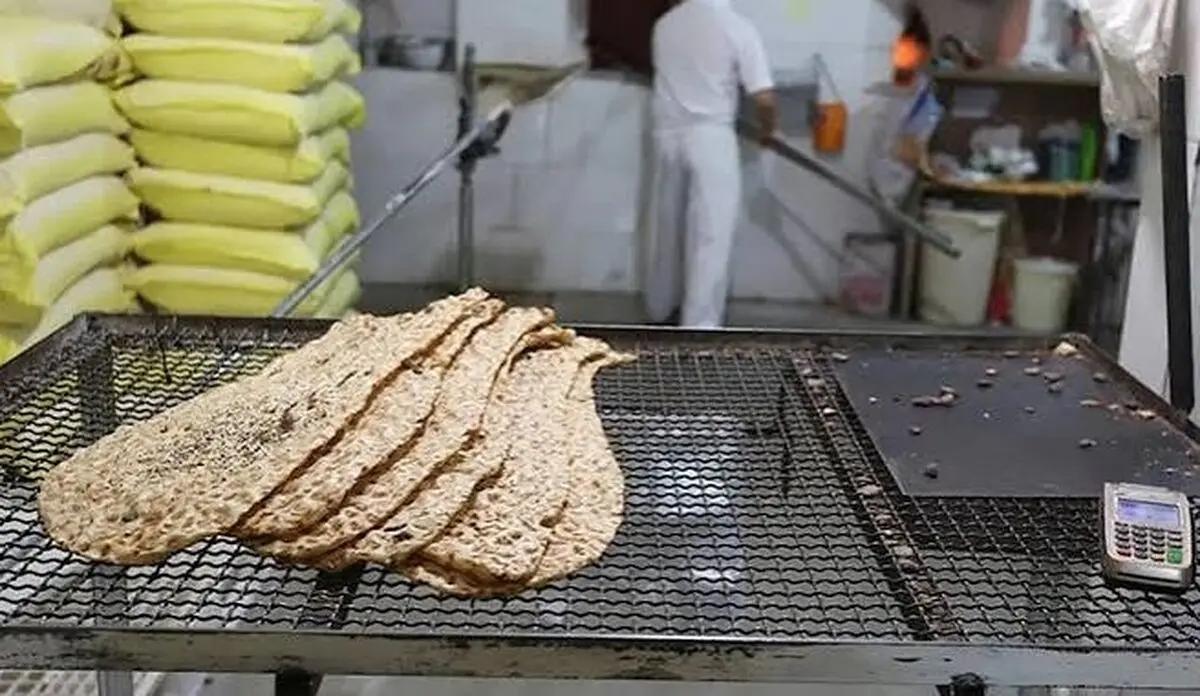
Iranian Labour News Agency (ILNA): “Do not Deny Labourers Their Bare Sustenance.”
Critique of the Iranian Government Rationing the Last Remaining Staple on Workers’ Impoverished Tables
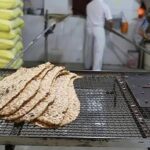
Amid chronic inflation and eroding purchasing power that have eliminated protein items, dairy products, and even rice from the livelihood baskets of wage earners, bread is no longer a mere accompaniment, but the sole dietary mainstay of the working class. Consequently, the plan to restrict and ration bread under the pretext of “combating unconventional consumption” has met with a wave of expert and labour union criticism, as this policy effectively targets the last bastion of food security for disadvantaged strata.
As reported by ILNA, “bread consumption management” is a code phrase whose decoding points to troubling outcomes.
In the coming two to three months, severe winter conditions will force the widespread closure of construction sites, leaving construction laborers without any source of income. On the eve of this harsh winter, increasing the price of bread or imposing rationing represents a detrimental measure against working-class livelihoods.
Analytical Report: Examining Policy Contradictions in the Bread Market in Iran and Their Socioeconomic Consequences for the Working Class and the Poor
Recent discussions surrounding ‘bread sold by weight’ and ‘rationing for unconventional consumption’ have sparked widespread concern across society. A careful examination of official statements alongside field reports reveals a clear gap and contradiction between macro-level assurances and actual practices in bakeries nationwide—a discrepancy that directly threatens the livelihoods of low-income groups and the working class.
While senior officials—including the Head of the Chamber of Guilds, the Spokesperson for the Flour and Bread Council, the Deputy Minister of Economy, and the Minister of Agriculture Jihad—have ostensibly denied any plans for ‘bread rationing,’ the caveats and exceptions embedded in their remarks point to a different reality. For instance, while rejecting general rationing, the Deputy Minister of Economy confirmed the imposition of restrictions on ‘individuals with unconventional consumption.’
In practice, however, provincial authorities in Khuzestan and Zanjan have announced the quiet implementation of a ‘bread purchase management’ plan, capping subsidized flour/bread quotas at 8 kilograms per capita per month, with any excess consumption subject to free-market rates.
Simultaneously, field reports indicate multi-hour queues in cities such as Maragheh and Astara, as well as strict limits on the number of loaves sold per customer in Zahedan. Furthermore, although the Minister of Agriculture Jihad emphasized that wheat prices for traditional subsidized bakeries will remain unchanged, he officially announced price adjustments for wheat allocated to food industries—a move signalling an imminent wave of price hikes for flour-derived staples such as pasta, industrial bread, baguettes, cakes, and biscuits.
The authorities’ primary justification for restricting supply is combating ‘unconventional consumption’ and rent-seeking—an argument inconsistent with both economic logic and ground realities. Unlike commodities such as gasoline, bread cannot be stockpiled, hoarded, or smuggled across borders; it is strictly a daily perishable staple.
Field observations in Tehran bakeries demonstrate that purchases of 10 to 12 loaves in a single transaction are made not by profiteers, but by construction and municipal workers, where one labourer buys bread on behalf of a crew for breakfast and lunch. In effect, rather than exercising effective oversight over the flour distribution network and tackling large-scale corruption, policymakers have framed the high bread consumption of labourers as ‘unconventional consumption.’
This policy approach is being pursued at a time when the dining tables of disadvantaged households have shrunk more than ever. With the gradual exclusion of protein staples such as meat, poultry, and even eggs, and with the floor price of rice reaching roughly 400,000 tomans per kilogram, bread has effectively become the sole primary staple and nutritional substitute in working-class diets. Consequently, contractionary policies in the bread sector have a sharply regressive, class-based impact: a 10 percent increase in bread prices alters the food expenditure of affluent households by less than one-tenth of a percent, yet raises the living costs of a worker earning 20 to 25 million tomans by 10 to 15 percent.
Beyond price pressures, tying bread quotas to ‘national ID numbers’ and ‘heads of households’ carries severe social consequences, entirely excluding vulnerable populations such as foreign workers and undocumented citizens—particularly in Sistan and Baluchistan province—from accessing subsidized bread. Concurrently, the expansion of ‘free-market baking’ (azadpazi), which has driven the price of a single Barbari loaf to 30,000 tomans, has pushed the cost of a simple breakfast for a few workers to nearly 100,000 tomans.
Persisting with this trajectory on the threshold of winter—when construction sites shut down and seasonal unemployment surges—will not improve economic governance; instead, by dismantling the last nutritional safety net of the poor, it will deepen class stratification and exacerbate the livelihood crisis facing the working class.