






 Posted in
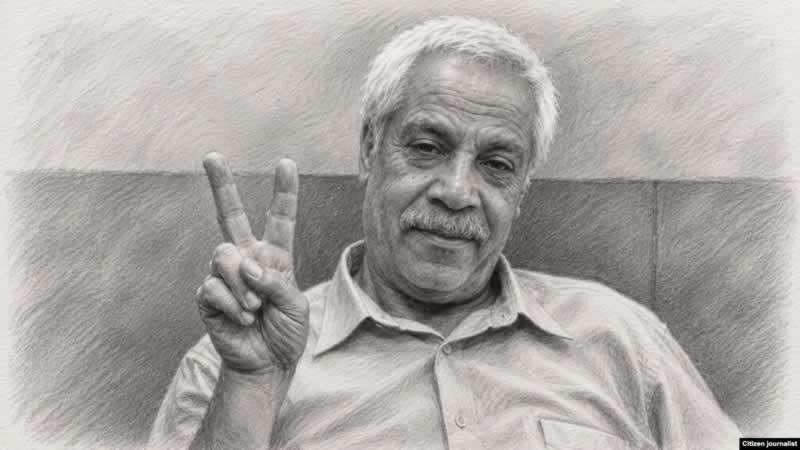
The 8th Year of Hashem Khastar’s Imprisonment:
The Teacher Whom Prison Could Not Silence
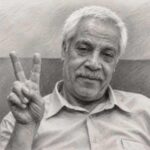
Hashem Khastar, a retired teacher, trade union activist, and civil rights advocate, is currently serving the eighth year of his imprisonment in Vakil Abad Prison in Mashhad. Now 73 years old, he suffers from gastrointestinal disorders, hypertension, and haemorrhoids. According to the Human Rights Activists News Agency (HRANA) and a source close to his family, despite requiring specialized medical examinations, he has thus far been denied transfer to an external hospital for treatment. Furthermore, his inability to consume prison food and resulting reliance on fruit purchased from the prison commissary have led to severe weight loss.
From the Classroom to Trade Union Activism
Hashem Khastar was born on May 23, 1953, into a family staunchly opposed to oppression; his father was a supporter of Dr. Mohammad Mosaddegh. After earning a degree in agriculture from Urmia University, he worked briefly in the agricultural sector before joining the Ministry of Education. For many years, he taught at the Agricultural Vocational High School in Torbat-e Jam and the Shahid Yousefi Vocational High School in Mashhad, retiring in 2008. Despite being offered administrative positions, he chose to remain in the classroom, viewing education as a vital arena for raising awareness and fostering critical thinking.
He was among the founders of the Teachers’ Trade Association of District 6 in Mashhad and was elected by fellow educators to serve as president of the Greater Khorasan Teachers’ Trade Association. Beginning in 1990, his trade union activism was met with repeated summonses and prolonged interrogations. He was subsequently arrested while attempting to organize a nationwide gathering of educators in Mashhad and, upon refusing to cancel the event, was sentenced to three years of suspended imprisonment.
Arrests and Years of Imprisonment
Following the protests of 2004, he was held for a period in solitary confinement by the Ministry of Intelligence. In 2006, the Administrative Violations Board of the Ministry of Education sentenced him to a salary grade demotion and subsequently a one-eighth deduction from his salary—penalties that also adversely affected his pension and end-of-service severance pay.
On June 15, 2009 , he was arrested and initially sentenced to six years in prison, a verdict later reduced on appeal to two years of imprisonment and a two-year travel ban. While incarcerated, he wrote and published open letters detailing the sanitary conditions, food quality, and living standards of prisoners. These very letters led to new judicial cases being filed against both him and his wife. Although his wife was acquitted, Khastar was sentenced to pay a fine; refusing to pay, he chose to remain imprisoned instead. He remained behind bars until September 8, 2011 , without being granted a single day of furlough, and was imprisoned for several additional months in 2012 over the same letters.
On October 23, 2018, he disappeared while on his way to his orchard. Following persistent inquiries, his family discovered that he had been arrested and forcibly transferred to the Ibn Sina Psychiatric Hospital in Mashhad. This action sparked widespread protests from educators and human rights activists, and he was ultimately released on November 10, 2018.
The 16-Year Prison Sentence and New Judicial Cases
On August 11, 2019, Hashem Khastar was arrested alongside several civil rights activists who had gathered outside the Mashhad courthouse to protest the 13-year prison sentence handed down to Dr. Kamal Jafari Yazdi—an arrest that followed the publication of the open letter by 14 civil activists calling for the resignation of Ayatollah Khamenei. After being transferred to Vakil Abad Prison and protesting the conditions of his detention, he spent nearly seven months in solitary confinement at the Ministry of Intelligence detention centre.
In February 2020, Branch 4 of the Mashhad Revolutionary Court sentenced him to 16 years in prison, three years of internal exile to Nikshahr, and a three-year travel ban. On appeal, this verdict was modified to 16 years of imprisonment, two years of internal exile, and a two-year travel ban. While incarcerated, four additional cases were brought against him, which, according to his family, carry a combined sentence of eight years. Furthermore, in July 2023, he was sentenced in a separate case to an additional two years and six months in prison.
The Resilience of His Family
Alongside Hashem Khastar, his family has also endured years of pressure and the hardship of his imprisonment. His wife, Sedigheh Malekifard—herself an educator and civil rights activist—has tirelessly followed up on her husband’s situation throughout these years and publicized reports regarding his arrests and convictions. She too faced judicial prosecution for publishing her husband’s letters from prison, though she was ultimately acquitted.
A Teacher Who Refused to Retreat from His Beliefs
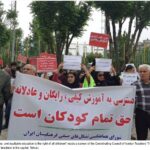
The Coordinating Council of Iranian Teachers’ Trade Associations condemns the imprisonment of teachers for trade union and civil activism and demands the following:
1- The immediate and unconditional release of Hashem Khastar;
2- His immediate transfer to a hospital outside the prison and full access to specialized medical treatment;
3- The release of all imprisoned teachers and trade union activists, and an end to summonses, arrests, and sentencing against them.
Responsibility for any harm to Hashem Khastar’s health and life rests with the security and judicial authorities.
Source: Coordinating Council of Iranian Teachers’ Trade Associations